


Your metabolism isn’t a fixed speed you can simply switch on. It describes how your body uses energy for basic functions, processing food and physical activity, and energy use changes over time. Lifestyle changes to improve metabolic rate are about supporting these processes and building habits that help manage weight, not finding a quick fix.
If losing weight feels harder than expected, it’s understandable to wonder whether a slow metabolism is to blame. But metabolism is only part of the picture: food choices, movement, muscle mass and sleep also affect energy balance and metabolic health.
This article explains how metabolism works and how everyday choices can influence it. You’ll learn how balanced eating, regular activity, strength training, sufficient sleep and a sensible approach to calorie intake fit together, so you can focus on sustainable habits rather than extreme restrictions or temporary fixes.
Key Takeaways
- Track your food, movement and weight to spot patterns and make realistic adjustments over time.
- Avoid severe calorie restriction; a sustainable energy deficit is easier to maintain alongside balanced, regular meals.
- Combine aerobic activity with resistance training to support fitness and help preserve lean body mass during weight loss.
- Choose less highly processed food and limit added sugars as part of a balanced eating pattern.
- Prioritise consistent, quality sleep, which supports the hormonal processes involved in energy use and metabolic health.
How can you lose weight with a slow metabolism?
Lower energy expenditure can make weight loss feel less predictable, but it doesn’t make it impossible. Metabolic rate includes energy used for basic functions, processing food and physical activity. Sustainable lifestyle changes to improve metabolic rate work with these processes rather than relying on a quick fix.
Tracking food, activity and weight
Self-monitoring means recording what you eat, how you move and changes in your weight, then comparing habits with outcomes. For example, note meals, snacks, walks and weigh-ins in a daily log. A consistent record can reveal overlooked portions or less active days, helping you adjust one behaviour at a time rather than sharply cutting calories.
Use your record to spot patterns, not judge a single day. A week with fewer walks or larger portions may explain a change better than the idea of a permanently “slow” metabolism. Keep entries practical: record meals soon after eating, note activity such as a lunchtime walk, and compare weight trends over time. If a takeaway or a long day at a desk disrupts your routine, note that context too.
Weight loss requires an energy deficit: eating fewer calories than your body uses, or increasing activity so you use more. A daily deficit of 500-1,000 kcal is associated with weight loss of 0.5-1.0 kg per week in the article’s practical recommendations. Your log helps show whether food intake, movement or both need adjusting.
Include protein-rich choices such as eggs, yoghurt, fish, beans or lentils in meals. The dietary recommendation here allocates approximately 15% of calories to protein. Resistance training alongside adequate protein can help preserve lean body mass during weight loss, supporting the tissues involved in energy use. These are practical lifestyle changes to improve metabolic rate while maintaining a balanced approach to food.
Physical activity and weight loss
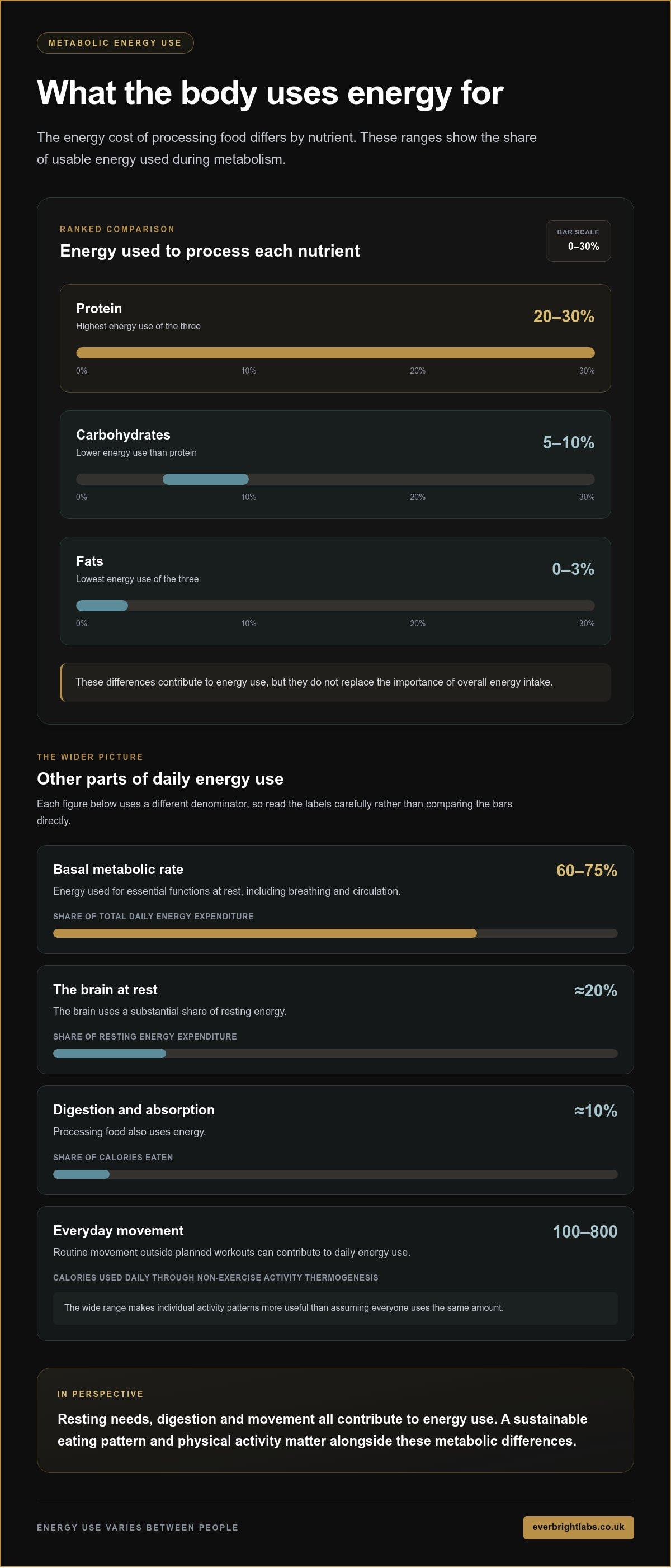
Physical activity uses energy directly, while everyday movement contributes too. Non-exercise activity thermogenesis, which includes routine movement outside planned workouts, accounts for about 100 to 800 calories used daily. The wide range makes individual activity patterns more useful than assuming everyone burns the same amount.
Build movement from your current baseline. If you average 5,000 steps, add 500 steps at three-day intervals, gradually working towards 10,000-12,000 steps a day. Walking is one option; jogging for 20-40 minutes per day, or biking or swimming for 45-60 minutes per day, are alternatives.
The practical recommendation is moderate-to-vigorous exercise for at least 60 minutes on most days, with a minimum of five days per week. Choose activities that fit your routine, then track them alongside food and weight. A lasting plan pairs physical activity with nutritional changes, since both support metabolic changes and long-term weight maintenance.
Avoiding overly restrictive calorie intake
Eating less energy than your body uses creates a calorie deficit, but severe restriction can be difficult to sustain. Eating breakfast or eating more often does not, by itself, guarantee a higher metabolic rate. Overall energy intake and physical activity matter more.
Calorie deficits and energy intake
A calorie deficit means taking in less energy from food than your body uses through its daily processes. This difference can support weight loss, but the size of the deficit affects how manageable your eating pattern feels.
Balanced meals at regular intervals can provide a steady source of energy and make it easier to include varied foods. For example, combine vegetables, whole grains and a protein food rather than removing entire food groups. A general recommendation in the research is at least 1,200 calories per day to stay healthy; individual energy needs vary with body size, activity and other factors.
Long-term fasting and drastic cuts are discouraged because they can slow metabolism and encourage the body to conserve energy. Rather than skipping breakfast or repeatedly missing meals, review portions and frequent extras first. A smaller serving of a high-calorie snack can reduce intake without removing the meal’s protein, fibre or other nutrients.
Regular eating doesn’t mean everyone needs the same meal schedule. If three meals suit your routine, use them to spread food across the day; if smaller meals work better, keep portions balanced. Neither breakfast nor meal frequency overrides total calorie intake.
Resting calorie use and metabolic rate
Basal metabolic rate is the energy used to maintain essential functions at rest, including breathing and circulation. It typically accounts for 60-75% of total daily energy expenditure, so resting needs form a substantial part of daily calorie use.
Resting energy needs vary with factors such as body size, age and lean mass. The brain uses approximately 20% of resting energy expenditure, while other organs also require a continuous energy supply. This explains why calorie burning continues during sleep and quiet periods, even without planned exercise.
Digestion and nutrient absorption use energy too: about 10% of calories eaten go towards these processes. Protein uses 20-30% of its usable energy during metabolism, compared with 5-10% for carbohydrates and 0-3% for fats. These differences contribute to energy use, but they don’t cancel out the importance of overall intake.
Physical activity adds to daily energy use. A brisk walk, cycling to work or taking the stairs uses energy beyond your resting needs. Pair movement with a sustainable eating pattern rather than trying to lose weight through extreme restriction. Constantly trying to eat as little as possible can undermine consistency; gradual adjustments are more practical to maintain.
High-intensity exercise and strength training
As body mass falls during weight loss, energy needs can fall too, reducing daily calorie use. Strength exercise and regular movement help limit this change by supporting muscle retention and keeping physical activity in your routine.
To limit metabolic slowdown, combine a sustainable approach to eating with resistance training rather than relying on severe calorie cuts. Muscle uses more energy at rest than fat, although this difference alone won’t produce substantial weight loss.
Preserving muscle during weight loss
Strength training challenges muscles against resistance, helping preserve lean tissue as weight falls. This matters because muscle supports physical function and contributes to energy use, including at rest.
One kilogram of muscle burns about 13 kcal per day at rest, compared with 4-5 kcal per day for one kilogram of fat. This difference is modest, so strength work is valuable for muscle retention and function, not as a shortcut to rapid calorie burning.
For example, someone losing weight could include squats, wall push-ups and resistance-band rows. Pairing these exercises with adequate dietary protein can help preserve lean body mass. Exercise also supports strength for everyday tasks such as carrying shopping or climbing stairs.
Strength training recommendations
Strength training means working major muscle groups against resistance, using weights, resistance bands or body weight. A practical recommendation is resistance training 2-3 times per week, targeting all major muscle groups.
Choose a resistance level that makes the muscles feel tired after about 12 to 15 repetitions. One set of each exercise can provide health and fitness benefits; focus on controlled movement and include legs, hips, back, abdomen, chest, shoulders and arms.
Allow time to recover between demanding sessions. The body needs time to recover from high-intensity exercise, and muscles need time to adapt. For example, alternate a full-body resistance session with walking or another activity that uses different movement patterns.
High-intensity aerobic activity can complement strength work, but you don’t need to start at maximum effort. Gradually build intensity with brisk intervals on a cycle or short uphill walks, adjusting the effort to your current fitness. This lets you increase the challenge without making every session exhausting.
Adults may lose 3-8% of muscle mass per decade after age 30 without resistance training. A consistent routine can help counter this gradual loss. Start with movements you can perform with good form, then increase resistance as they become easier. If exercise has been absent from your routine, begin gently and build up over time.
Reducing ultra-processed foods and added sugars
Food choices can affect how easily you manage calorie intake and maintain a balanced diet. Replacing sugary drinks, confectionery or packaged snacks with fruit, vegetables, whole grains and protein-rich foods is a practical change. It supports overall metabolic health, although no single food shifts your basal metabolic rate into a higher gear.
Start with the products you consume most often. For example, swap a fizzy drink for water, or choose porridge with fruit instead of a heavily sweetened breakfast cereal. The World Health Organization recommends limiting added sugars to less than 10% of daily energy intake. Check ingredient lists and nutrition labels to identify added sugars in sauces, flavoured yoghurts and drinks.
Ultra-processed foods can be convenient, but eating them often may make excess energy intake easier, particularly when they’re high in added sugars or fats. Build meals around recognisable ingredients such as vegetables, beans, whole grains, eggs, fish or skinless poultry. Lentil and vegetable soup, for instance, combines plant protein and fibre in one meal. These choices can support fullness and make a calorie-conscious pattern easier to maintain.
Protein-rich foods such as meat, dairy and legumes require energy to digest and process. This contributes to daily energy use, but not enough to make protein a stand-alone weight-loss method. Include a source at meals, such as yoghurt at breakfast, beans at lunch or fish at dinner. Pair it with vegetables or whole grains for a nourishing meal.
Green tea and coffee are often promoted as metabolism boosters, but a drink can’t offset excess energy intake or replace physical activity. Don’t treat their effect on calorie burning as a weight-loss strategy. Choose unsweetened versions if you enjoy them: syrups, sugar or cream can increase energy intake without improving the drink’s metabolic effect.
Chilli peppers contain capsaicin, which may slightly increase energy expenditure. A review estimated that peppers could burn around 10 additional calories per meal. The projected effect was modest: about 0.5 kilograms of weight over 6.5 years for an average-weight male. Capsaicin can add flavour to meals, but it won’t meaningfully counter obesity or excess calorie intake on its own.
Make gradual substitutions rather than banning foods altogether. For example, keep sweet snacks occasional, choose water most often, and add fruit or vegetables to meals. These steps can reduce added sugar while preserving a varied diet. Adults benefit from habits they can sustain, not from relying on tea, coffee or spicy foods to change metabolic processes.
Sleep and metabolic health
Sleep, eating patterns and physical activity interact with the body’s metabolic processes. For adults, consistent sleep and balanced routines support health alongside weight management.
Adults are advised to get 7-9 hours of quality sleep per night. Four nights or longer without enough sleep has been associated with a slight decrease in fat metabolism. Sleep restriction can reduce insulin sensitivity by up to 25%, affecting how the body responds to insulin. These effects show why sleep belongs alongside nutrition and movement, rather than being treated as separate from metabolic health.
Stress can disrupt sleep and make regular eating or exercise harder to maintain. Poor sleep also affects hormones involved in appetite and energy use. A practical step is to keep a regular bedtime and wake time, and protect enough time for rest. If evening stress leads you to snack or skip strength training, notice the pattern and adjust the routine behind it.
Build meals around vegetables, fruit, beans, whole grains and lean protein. For example, fish with brown rice and vegetables offers a balanced alternative to relying on highly processed snacks. Regular physical activity and resistance exercise complement these dietary choices by supporting fitness and muscle function. No single food or workout can replace an overall balance of habits.
Metabolic syndrome describes a cluster of health risks. A person may be diagnosed when they have at least three listed risk factors. This is why it’s useful to consider health markers alongside weight: weight alone doesn’t show the full picture. Blood pressure, blood sugar and blood fats can all inform an assessment of metabolic health.
For UK readers, NHS healthy-weight guidance and online resources offer a starting point for considering eating habits and physical activity together. Use this advice to build sustainable routines, including balanced nutrition and regular movement, rather than seeking one quick fix for metabolism. Sleep quality matters too, so include a consistent bedtime among the habits you review.
Medical tests can help assess metabolic health and overall body function. Healthcare providers may use a basic or comprehensive metabolic panel, while diabetes, high blood pressure or obesity can lead to more frequent testing. If unexplained weight changes or fatigue occur alongside poor sleep, discuss suitable assessment with a healthcare professional. Test results provide information that everyday weight tracking can’t.
Everbright Labs: Fat Metaboliser
Fat Metaboliser is Everbright Labs’ stimulant-free supplement for metabolic support, with no caffeine. It may suit readers who want to add a supplement alongside balanced eating, regular physical activity and consistent sleep, rather than use it as a replacement for those habits.
Metabolism involves several interacting processes, so a supplement isn’t a quick fix for weight loss or a substitute for medical care. If you’re working on sustainable lifestyle changes and want to explore a supplement as part of your routine, read the product information to understand its intended role.
Visit Everbright Labs to explore Fat Metaboliser for metabolic support.
Choose a sustainable next step
Progress is easier to assess when you focus on one manageable change at a time. Choose a habit that fits your routine, record how it feels, and review whether it remains practical. This makes lifestyle changes to improve metabolic rate an adaptable approach, rather than another all-or-nothing plan.
Supplements can complement these habits, not replace them. Everbright Labs offers Fat Metaboliser for metabolic support, Timeless NAD+ Support for cellular health and healthy ageing, and the Everbright Labs Bundle, which brings its primary formulations together. Each is stimulant-free and contains no caffeine. Read the product information and consider how an option fits your routine and health priorities.
For a considered next step, contact Everbright Labs to explore the range. Keep building a routine around choices you can sustain, and give your progress room to develop.
Frequently Asked Questions
What is metabolism?
Metabolism is the collection of chemical processes that keep your body functioning and convert nutrients into usable energy. It supports breathing, circulation, tissue repair and movement. It isn’t a separate switch that determines whether you gain or lose weight. Your body uses energy between meals as well as during a walk, while nutrients also provide materials for maintaining cells and tissues.
What’s the difference between a fast metabolism and a slow metabolism?
A “fast” or “slow” metabolism describes how much energy someone uses, but these phrases aren’t precise diagnoses. Energy needs differ according to body size, muscle mass, age and activity patterns. Two people eating similar meals may therefore have different energy requirements. If your weight changes unexpectedly, consider the wider context, including changes in routine, appetite, medication or health, rather than assuming metabolism alone explains it.
How do I increase my resting metabolic rate?
Support your muscles with resistance exercise and include protein-rich foods in a balanced diet. Muscle contributes to energy use at rest, but building it won’t transform calorie requirements overnight. Avoid severe restriction, which can make it harder to maintain nutrition and training. To get started, add resistance to movements such as chair squats or wall push-ups, then progress as your strength and technique improve.
What does metabolic rate mean, and what affects it?
Metabolic rate is the energy your body uses over a period of time. It includes energy for resting functions, processing food and movement. Basal metabolic rate refers specifically to energy used at rest; total daily energy expenditure also includes planned exercise and everyday activity. Body composition, age and movement patterns influence energy needs, so a single estimate can’t capture everyone’s daily variation.
Can exercise increase resting metabolic rate, and what types are most effective?
Exercise can support resting energy use by helping maintain or build muscle, particularly through resistance training. Aerobic activity such as brisk walking or cycling also uses energy during the activity and supports cardiovascular fitness. Combining both types addresses different aspects of health. The most useful routine is one you can repeat and gradually adapt, rather than brief, exhausting sessions.
How does strength training affect metabolism and how often should adults do it?
Strength training challenges muscles and helps maintain the lean tissue involved in movement and energy use. A practical approach is to work all major muscle groups through resistance training 2-3 times per week. Examples include resistance-band rows, squats and press-ups. Allow your technique to guide progression: increase resistance only when you can complete a movement with control.
How much protein should adults eat to support muscle and metabolic health?
An intake of around 1.2-1.6 g of protein per kg of body weight per day is described as useful, particularly alongside resistance training. To estimate a personal daily range, multiply your weight in kilograms by both ends of that protein range. Spread protein across meals, using foods such as eggs, dairy, fish, beans or lentils to support variety.
How do sleep duration and quality affect metabolism?
Sleep gives the body time to regulate processes involved in appetite, blood sugar control and energy use. Adults are advised to get 7-9 hours of quality sleep per night. A steady sleep and wake schedule can make sufficient rest easier to achieve. If you regularly wake unrefreshed or struggle to sleep, note the pattern and discuss persistent concerns with a healthcare professional.
Share:
Science-Backed Longevity Stack: How to Build a Focused, Evidence-Led Routine
NAD+ for Anti-Ageing: Potential Benefits and What Evidence Shows