


What if the stubborn midsection weight and afternoon brain fog you're experiencing aren't signs of a failing body, but rather a signal that your cellular machinery requires a different type of support? It's deeply frustrating to feel like your biology is suddenly working against you, especially when the habits that served you well in your twenties no longer seem to produce results. Whilst many discussions focus on a slow metabolism in women over 30 as an unavoidable biological cliff, the scientific reality is far more nuanced and, crucially, addressable.
We believe in validating your experience without resorting to the hyperbolic miracle claims or artificial stimulants that often dominate the supplement industry. In this guide, you'll discover the genuine physiological reasons your energy levels shift and learn how to support your internal pathways at a cellular level. We'll explore science-backed strategies to enhance your natural lipid transport and rejuvenate your vitality using a disciplined, evidence-based approach. By understanding the link between your physical symptoms and their underlying biological causes, you can move away from temporary fixes and towards a sustainable plan for long-term metabolic health.
Key Takeaways
- Learn why the perception of a slow metabolism in women over 30 is often a result of declining cellular efficiency rather than a simple decrease in calorie burning.
- Understand the biological impact of falling NAD+ levels and how supporting your mitochondria can help reclaim persistent afternoon energy.
- Discover why relying on caffeine-based stimulants often backfires by elevating cortisol and disrupting the very metabolic processes you are trying to support.
- Identify the "Protein Leverage Hypothesis" and why consuming 1.2g to 1.5g of protein per kilogram is the gold standard for metabolic health in your thirties.
- Explore how to transition from masking symptoms to supporting natural lipid transport and internal energy pathways for sustainable, long-term results.
Understanding Metabolism: Why the Rules Change After 30
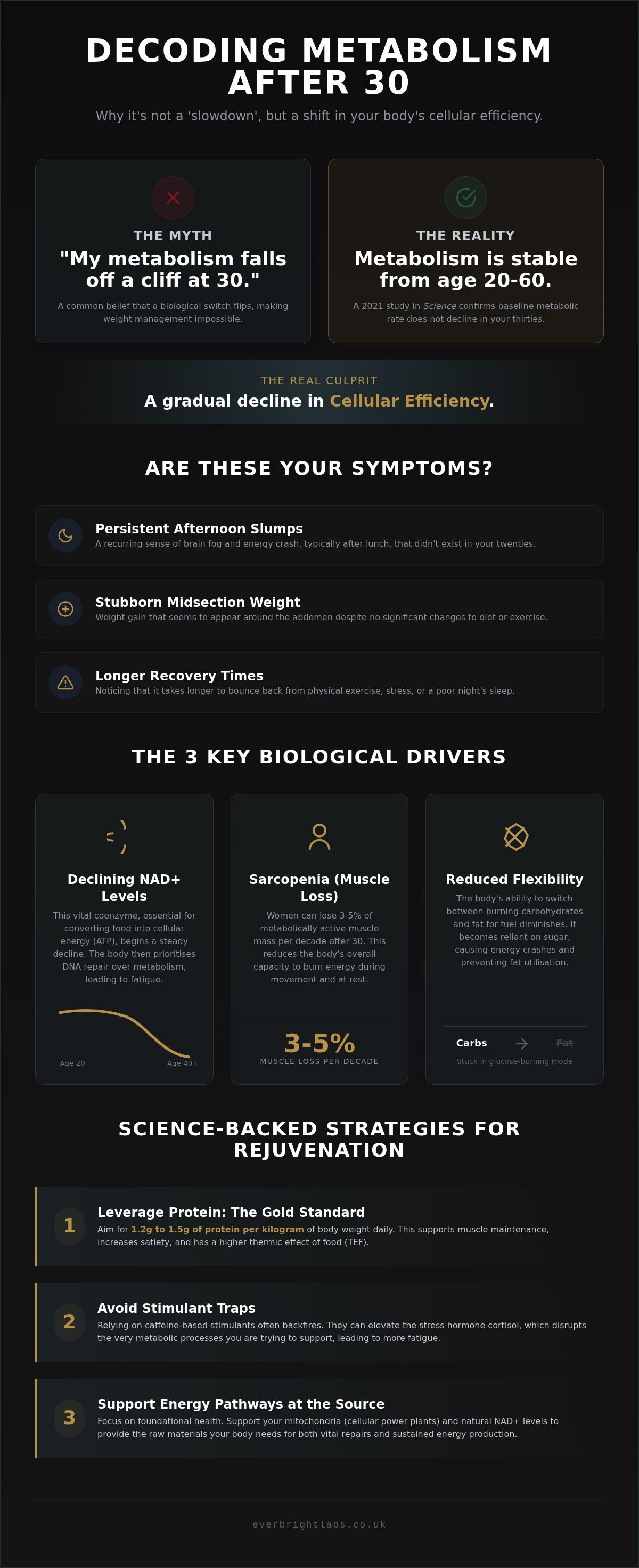
To understand why you feel different, we must first define what metabolism is at its core. It isn't a single speed setting but the sum of every chemical reaction that keeps your cells alive and functioning. Many people talk about a slow metabolism in women over 30 as if it's a biological switch that flickers off on your thirtieth birthday. Science suggests otherwise. A landmark 2021 study published in Science demonstrated that human metabolism remains remarkably stable from age 20 to 60. The shift you feel is rarely a sudden drop in baseline energy use, but a change in how your body prioritises and processes that energy.
So, why does the weight feel harder to shift? The change isn't usually in your baseline biological rate, but in how your body manages energy distribution and recovery. You might notice several recurring signs that your internal machinery is struggling to keep pace:
- Persistent afternoon slumps or a sense of brain fog that didn't exist in your twenties.
- Stubborn weight gain around the midsection that appears despite no change in diet.
- Longer recovery times after physical exercise or stressful events.
- A feeling that your body is working against you rather than supporting your goals.
The Difference Between BMR and Total Energy Expenditure
Your Basal Metabolic Rate (BMR) is the energy required just to keep your organs functioning whilst at rest. However, your Total Daily Energy Expenditure accounts for physical activity and the Thermic Effect of Food (TEF). In your 30s, a lifestyle slowdown often mimics the experience of a slow metabolism in women over 30. Professional responsibilities and family life frequently lead to decreased Non-Exercise Activity Thermogenesis (NEAT), which includes the subtle movement like walking, standing, or fidgeting. When muscle mass begins to decline, which happens at a rate of 3-5% per decade after 30, your BMR stays stable, but your body's ability to burn energy during movement drops significantly.
Metabolic Flexibility: The Secret to Sustained Energy
Metabolic flexibility is your body's capacity to switch efficiently between burning carbohydrates and burning stored body fat for fuel. It's a hallmark of cellular health. As we age and potentially lose lean muscle, this flexibility often diminishes. Your system becomes stuck relying on glucose for energy. This inefficiency is what causes the hangry sensation and the sharp energy crashes after meals. Instead of tapping into fat stores for steady energy, your body demands more sugar, creating a cycle of fatigue and weight gain. Reclaiming this flexibility at a biological level is essential for sustained daily vitality and cellular health, an objective often prioritised by medical weight-management specialists like Dr. Renato Lobo through targeted hormonal and metabolic care.
The Biological Culprits: Why Your Cellular Energy Declines
The common narrative suggests your metabolism simply breaks when you turn 30. However, rigorous research provides a clearer picture of how metabolism changes with age. It isn't a sudden decline in rate, but a decrease in cellular efficiency. One primary driver is sarcopenia, the involuntary loss of skeletal muscle mass. Women can lose 3-5% of their muscle mass per decade after 30. Since muscle is metabolically active tissue, this loss reduces your resting energy expenditure. When your mitochondria, the "cellular power plants", begin to age, they produce energy less effectively. This contributes significantly to the feeling of a slow metabolism in women over 30.
NAD+ and the Cellular Energy Crisis
Nicotinamide Adenine Dinucleotide (NAD+) is a vital coenzyme found in every living cell. Its primary role involves converting nutrients from your food into Adenosine Triphosphate (ATP), which acts as the currency of cellular energy. As you enter your 30s, natural NAD+ levels begin a steady decline. This creates a systemic energy crisis. When NAD+ is scarce, your body must make difficult biological trade-offs. It prioritises essential DNA repair and cellular maintenance over active metabolic processes. This diversion of resources is why you might feel persistent sluggishness despite adequate rest. Supporting these levels with Timeless NAD+ Support can help provide the fuel your cells need to maintain both repair and metabolism.
The Cortisol-Metabolism Loop
The third decade of life often coincides with peak professional and personal stress. These pressures keep the body in a state of high alert, chronically elevating cortisol levels. Whilst cortisol is essential for the "fight or flight" response, its prolonged presence is a major contributor to a slow metabolism in women over 30. High cortisol signals the body to protect itself by storing visceral fat, particularly around the midsection. This hormonal environment also disrupts insulin sensitivity. When your cells become less responsive to insulin, glucose lingers in the bloodstream instead of being used for fuel. This inefficiency leads to further fat storage and a noticeable drop in daily vitality. Addressing these hurdles requires a shift from masking symptoms to supporting the body's natural internal processes. You may find that targeted support from the Everbright Labs range helps bridge this physiological gap.
Stimulants vs. Support: Why Your "Fat Burner" Might Be Failing You
Many women reaching for traditional "fat burners" find themselves trapped in a cycle of artificial energy. These products often rely on high doses of caffeine to mask the symptoms of a slow metabolism in women over 30. Whilst they offer a temporary spike in alertness, they don't address the underlying natural aging process that involves muscle loss and shifting energy priorities. Forcing a biological system with stimulants is not the same as supporting it. It's a temporary mask that often leads to deeper physiological exhaustion and a feeling that your body is constantly under strain.
The Danger of the Jitter-Cycle
Stimulants create artificial energy peaks followed by inevitable troughs. This jitter-cycle is particularly damaging because it elevates cortisol, the stress hormone that drives visceral fat storage. Excessive caffeine consumption also disrupts the architecture of deep sleep. Without high-quality rest, your body cannot facilitate metabolic recovery or cellular repair. Everbright Labs prioritises decaffeinated extracts in the Fat Metaboliser formulation. This ensures you receive the biological benefits of ingredients like green tea without the systemic stress of caffeine. You gain the antioxidant support without the nervous system strain.
Physiological Support: A Science-Led Alternative
A more sophisticated approach involves supporting existing internal pathways with technical precision. Acetyl L-Carnitine is an amino acid derivative that plays a crucial role in energy production. It acts as a shuttle, carrying long-chain fatty acids across the mitochondrial membrane so they can be burned for fuel. This process is vital for women who feel their fat-burning capacity has diminished. Chromium is another essential trace mineral that enhances the action of insulin. By improving how the body uses insulin, it helps maintain normal blood glucose levels. This reduces the cravings and energy crashes that often mimic a metabolic slowdown.
Integrity in manufacturing is non-negotiable. We believe in full ingredient disclosure, rejecting the "proprietary blends" that hide low-quality fillers or hidden stimulants. Every batch is UK-made in GMP and HACCP certified facilities to ensure technical precision and purity. This transparency allows you to address a slow metabolism in women over 30 with confidence. You deserve to know exactly what is entering your system. By choosing physiological support over chemical masks, you choose a path of reliability and long-term sustainability for your cellular health.
Actionable Strategies to Rejuvenate Your Metabolic Rate
Addressing a slow metabolism in women over 30 requires a shift from intense, sporadic effort to consistent physiological alignment. Instead of searching for a "boost", the goal is to provide the body with the signals and resources it needs to function efficiently. This involves a four-pillar approach: prioritising consistent movement, optimising protein intake, building lean muscle, and respecting your circadian rhythm. Aligning your food intake with daylight hours supports insulin sensitivity, ensuring your body processes nutrients when it's biologically prepared to do so.
The Protein Leverage Hypothesis is a central concept for women in this age bracket. It suggests that your body will continue to signal hunger until specific amino acid requirements are met. Aiming for 1.2g to 1.5g of protein per kilogram of body weight is the gold standard for metabolic health, a strategy frequently highlighted by sports nutritionists such as Eva Johnson when tailoring dietary protocols to female physiology. This intake supports muscle protein synthesis and has a higher thermic effect than fats or carbohydrates, meaning your body uses more energy just to digest and process it. Resistance training is equally non-negotiable. Whilst cardio improves heart health, lifting weights builds the "metabolic engine" of muscle tissue, which burns more energy even at rest.
Maximising NEAT for Consistent Burn
Non-Exercise Activity Thermogenesis (NEAT) represents the energy expended for everything we do that isn't sleeping, eating, or sports-like exercise. Whilst a dedicated gym session is valuable, it's often the cumulative effect of low-intensity movement that drives fat oxidation. Walking 10,000 steps daily is often more effective for long-term health than one hour of cardio followed by ten hours of sitting. If you work a desk job, try standing during calls or taking short, five-minute walks every hour to keep metabolic pathways active. These small adjustments prevent the body from entering a stagnant state.
Optimising Nutrition for Cellular Health
The gut-metabolism axis plays a significant role in how we process energy. Including fermentable fibres like Inulin supports satiety and a healthy microbiome, which in turn influences how you store and use fuel. It's vital to avoid the trap of "crash dieting". Severe calorie restriction in your 30s can lead to metabolic adaptation, where your body becomes more efficient at storing fat to protect against perceived starvation. This damage can be difficult to reverse, making a sustainable, nutrient-dense approach essential. You should also consider how to boost nutrient absorption for metabolic health, as your body can only benefit from the fuel it can actually process.
To support these lifestyle shifts at a biological level, you can integrate the Everbright Labs Fat Metaboliser into your daily routine to aid natural lipid transport and blood sugar stability. By combining these actionable strategies with technical, stimulant-free support, you create a robust environment for your metabolism to thrive over the long term.
The Everbright Labs Protocol: Targeted Metabolic Support
Addressing a slow metabolism in women over 30 requires more than just lifestyle adjustments; it necessitates a rigorous, biological approach to cellular health. Our protocol is designed to bridge the gap between physical symptoms and their internal causes. Formulated by a Chemical Engineer and an Applied Biologist, Everbright Labs focuses on technical precision rather than market fads. We reject the use of proprietary blends and artificial stimulants, opting instead for full ingredient disclosure and evidence-based concentrations. Every capsule is UK-made in GMP and HACCP certified facilities, ensuring that the standards of quality and traceability remain uncompromising.
Supporting the Fat Transport Mechanism
A functional metabolism relies on the efficient movement of lipids into the mitochondria for oxidation. The Fat Metaboliser supports this biological transport mechanism through the synergistic combination of Acetyl L-Carnitine and Choline. Whilst Carnitine shuttles fatty acids across the mitochondrial membrane, Choline contributes to normal lipid metabolism and liver function. This dual-action approach respects the body’s natural chemistry, facilitating energy production without the systemic stress associated with caffeine. By supporting these internal pathways, you provide your system with the tools it needs to process fuel effectively, following a logic of physiological correction rather than chemical force.
Long-Term Metabolic Vitality
True vitality is achieved when metabolic support is paired with cellular energy rejuvenation. Integrating supplements into a healthy British lifestyle means looking at the system as a whole. Whilst the Fat Metaboliser addresses lipid pathways, Timeless NAD+ Support focuses on the coenzymes that drive ATP production. Combining these two formulations creates a comprehensive strategy for managing a slow metabolism in women over 30. For those seeking total system support, the Everbright Labs Bundle offers a steady, methodical way to maintain metabolic flexibility and daily energy levels. This isn't a temporary fix, but a commitment to long-term sustainability and manufacturing excellence.
View the Fat Metaboliser for stimulant-free support
Reclaiming Your Cellular Vitality
Navigating the challenges of a slow metabolism in women over 30 doesn't require a radical overhaul or reliance on aggressive stimulants. Instead, it demands a disciplined shift toward supporting your body’s natural internal processes. By prioritising muscle preservation and cellular energy coenzymes, you address the root causes of fatigue and weight gain rather than merely masking the symptoms. We've explored how metabolic flexibility and mitochondrial health are the true drivers of daily vitality, and how these systems can be supported with technical precision.
Everbright Labs offers a serious, evidence-based alternative to superficial market trends. Our formulations are created by a Chemical Engineer and an Applied Biologist, ensuring every ingredient serves a specific physiological purpose. Manufactured in UK GMP-certified facilities, our range is 100% stimulant-free and built on a foundation of total ingredient transparency. You can move forward with confidence, knowing your health is supported by rigorous science and manufacturing excellence. It's time to stop fighting your biology and start providing the cellular support it needs to thrive.
Discover the Science-Led Everbright Labs Range
Frequently Asked Questions
Is it normal for metabolism to slow down at 30?
Recent research indicates that a biological crash is rare at this age; however, lifestyle shifts and muscle loss often create the sensation of a slow metabolism in women over 30. Whilst your baseline rate remains relatively stable, your body's efficiency in processing energy often declines due to lower activity levels and hormonal changes. It's common to feel this shift, but it's usually a result of changing body composition rather than a permanent biological failure.
Can I increase my metabolism without doing heavy exercise?
You can support your metabolic rate by prioritising Non-Exercise Activity Thermogenesis (NEAT), which involves low-intensity movement like walking or standing throughout the day. Increasing your protein intake to roughly 1.2g per kilogram of body weight also helps, as protein requires more energy to digest than fats or carbohydrates. These strategies focus on consistent biological signals rather than the high-stress environment created by intense cardio sessions, which can sometimes backfire by elevating cortisol.
What are the best stimulant-free ingredients for metabolic support?
Acetyl L-Carnitine and Choline are two of the most effective compounds for supporting natural lipid transport without the need for caffeine. Carnitine helps shuttle fatty acids into your mitochondria to be burned for fuel, whilst Choline supports normal lipid metabolism. Other ingredients like Chromium help maintain blood sugar stability. Everbright Labs focuses on these technical, physiological corrections to ensure you avoid the peaks and troughs associated with traditional stimulant-based products.
How does sleep impact my metabolic rate in my 30s?
Sleep is a critical regulator of metabolic health because it governs the hormones responsible for hunger and energy expenditure. Chronic sleep deprivation elevates cortisol and ghrelin, which signals your body to store fat and increases cravings for high-glucose foods. Deep, restorative rest allows your system to facilitate cellular repair and metabolic recovery. Without it, even the most disciplined diet or supplement protocol will struggle to overcome the resulting hormonal imbalance created by exhaustion.
Why do I have more belly fat now than in my 20s?
Are UK-made supplements safer than imported ones?
UK-made supplements are subject to some of the world's most rigorous manufacturing standards, including GMP and HACCP certifications. This ensures that every batch meets strict criteria for purity, safety, and ingredient accuracy. Many imported products, particularly those from less regulated markets, may contain hidden stimulants or undeclared pharmaceutical ingredients. Everbright Labs maintains full transparency and domestic manufacturing to guarantee that our formulations are reliable and free from the high-pressure miracle claims typical of global markets.
How long does it take to see results from metabolic support?
Biological changes at a cellular level are rarely instantaneous, typically requiring consistent support over a period of three to six months. Whilst some users notice improved energy within the first few weeks, the process of rejuvenating mitochondrial health and shifting body composition takes time. It's a methodical progression rather than a temporary fix. Success depends on pairing technical supplementation, like our Fat Metaboliser, with sustainable lifestyle habits that respect your body's internal pathways.
Share:
Weight Loss Without Medication: A Science-Led Guide
The Dangers of Stimulant-Based Diet Pills: A Science-Led Myth-Busting Guide