


Weight loss support for sensitive individuals should address more than food choices. It can include help with emotional eating, a realistic goal, support for related health conditions and a manageable meal routine. A GP or dietitian can help you consider how your health, medicines and eating patterns shape your approach, while practical changes can make everyday habits easier to sustain. In Scotland, speak to a healthcare professional if you have an eating disorder.
It’s understandable if weight-related advice feels uncomfortable, especially when it relies on judgement or rigid rules. Struggling with eating habits isn’t a personal failure: stress, health needs and daily routines can all affect what feels manageable.
This guide explains how to recognise emotional or stress-related eating, find suitable help, set a healthy weight goal and account for conditions that affect weight management. It also covers regular meals and balanced portions as practical alternatives to restrictive dieting, helping you identify support that feels respectful and realistic for your life.
Key Takeaways
- Notice whether stress or emotions influence your eating, then look for support that responds without judgement.
- Explore self-help resources and professional guidance to find an approach that fits your circumstances.
- Set a gradual, realistic target: according to the Centers for Disease Control and Prevention, losing about 1 to 2 pounds a week is more likely to be maintained than faster weight loss.
- Consider how health conditions, medicines and other factors may affect weight management when planning changes.
- Build a steadier routine around regular meals, balanced portions and practical food planning rather than restrictive dieting.
Emotional and stress-related eating
Evidence-based weight management can combine regular meals, balanced portions and enjoyable physical activity with support for anxiety or emotional eating. If sensory sensitivities affect your food choices, build meals around familiar textures and make gradual changes rather than forcing yourself to eat foods that cause distress. Effective weight loss support for sensitive individuals should adapt to your preferences and needs.
Calorie tracking and weigh-ins can feel stressful if numbers intensify anxiety or preoccupation with food and weight. Restrictive dieting may also make eating harder to manage. The guidance favours regular meals, sensible portions and a balanced intake instead.
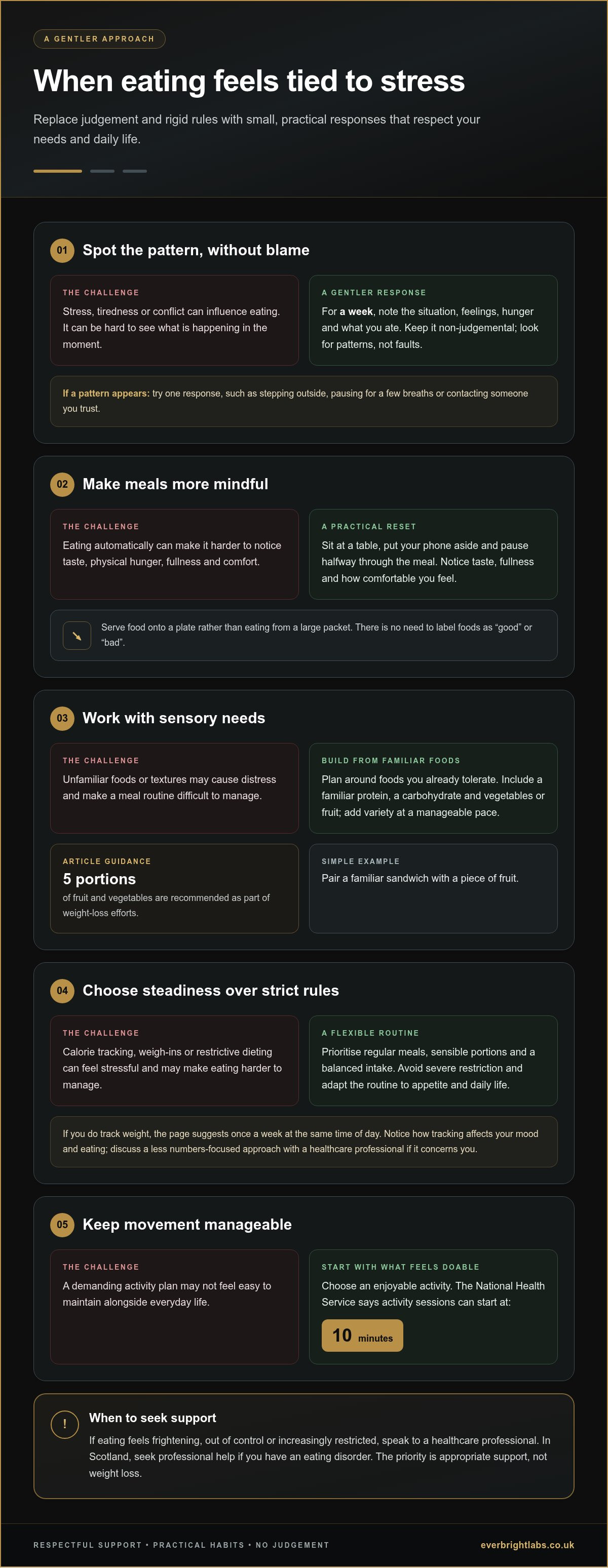
Start by noticing what happens before and after stress-related eating. For a week, jot down the situation, your feelings, hunger and what you ate, without judging yourself. A difficult meeting, tiredness or conflict may reveal a pattern. Then choose one response to try, such as stepping outside, pausing for a few breaths or contacting someone you trust.
Mindful eating means paying attention to your meal rather than eating automatically. Try sitting at a table, putting your phone aside and pausing halfway through to notice taste, fullness and comfort. Serve food onto a plate instead of eating from a large packet. These steps can help you recognise physical hunger and satisfaction without labelling foods as good or bad.
Plan meals around foods you already tolerate, then add variety at a pace that feels manageable. Include a familiar protein source, a carbohydrate and vegetables or fruit; the page recommends five portions of fruit and vegetables as part of weight-loss efforts. For example, pair a familiar sandwich with a piece of fruit. A walk or activity you enjoy can also support progress: the National Health Service says activity sessions can start at 10 minutes.
Don’t make calorie targets or weekly weigh-ins compulsory if they worsen distress. The page recommends weighing once a week at the same time of day to monitor weight loss, but your response matters: note how tracking affects your mood and eating, then discuss a less numbers-focused approach with a healthcare professional if it concerns you. Avoid severe restriction. A steady routine is easier to adjust around appetite, sensory needs and daily life. Weight loss support for sensitive individuals can focus on these practical adjustments rather than strict tracking.
If eating feels frightening, out of control or increasingly restricted, speak to a healthcare professional. In Scotland, people are advised to seek professional help if they have an eating disorder. The priority is appropriate support, not weight loss. For a separate focus on cellular energy, cellular energy support is a distinct wellbeing consideration, not a replacement for help with emotional eating.
2. Where can I get help with weight loss?
Start with self-help resources that turn broad aims into manageable actions. NHS inform lists websites, apps and local services across Scotland for weight-loss support. Its Eat Well, Feel Great, Lose Weight guide covers calculating BMI, healthy eating, staying active and planning ahead. Use a resource to choose a practical step, such as planning lunches before the working week begins.
A healthcare provider can help you identify support that fits your needs. A GP may refer you to a registered dietitian for specialist advice about what to eat, or to clinical and community programmes that support a healthy weight. Group-based support can provide structure and shared learning, with practical topics such as meal planning, fitting physical activity into your routine and responding to setbacks. Ask about support that suits your preferences and circumstances.
Pregnancy calls for tailored guidance rather than a standard weight-loss plan. Cardiff and Vale UHB’s Healthy Pregnancy Clinic is for pregnant women with a BMI over 35 kg/m². Dietitian support through the clinic is available to pregnant women with a BMI over 40 kg/m². If you’re pregnant and want to discuss weight or nutrition, raise it with your maternity or healthcare team, who can consider your pregnancy and health needs.
Sleep is another area to review. Tiredness can affect energy, appetite and the ability to maintain daily routines. Try switching off electronic devices at least 30 minutes before bedtime, then use a consistent wind-down activity, such as reading. A simple sleep record alongside notes about food and physical activity can help you spot patterns worth discussing with a health professional.
Setbacks are part of behaviour change, not proof that your effort has failed. Consultant Clinical Psychologist Dr Ross Shearer says setbacks are normal during a weight-loss journey. If a planned walk or meal routine slips, identify what disrupted it, then choose one adjustment. For example, move a walk to lunchtime or prepare an easy meal for busy evenings. That makes your next step specific and achievable.
To make self-help more useful, track nutrition, physical activity, sleep and stress together. A brief daily note can show whether late work, poor sleep or stress affects your eating or movement. Review the pattern regularly and choose one change to try, rather than changing everything at once. If self-guided steps aren’t enough, use your notes to explain what you’ve tried when seeking professional support.
3. What’s a healthy weight to aim for?
Sensitive individuals can lose weight without restrictive diets or shame-based coaching by choosing gradual changes that suit their health, routines and preferences. Focus on behaviours you can repeat, such as planning balanced meals or adding an enjoyable activity, rather than treating weight as a measure of personal worth.
Set a realistic goal with a healthcare professional, who can assess your diet, physical activity and health needs. Gradual weight loss of about 1 to 2 pounds a week is more likely to be maintained than faster weight loss, according to the Centers for Disease Control and Prevention.
Make goals specific enough to act on. NHS inform advises that small, realistic changes can make a big difference to health and wellbeing. For example, try walking for 15 minutes, 3 days a week during the first week. The CDC recommends focusing on two or three weight-loss goals at a time. You might choose that walk, a regular breakfast and preparing lunch the evening before. Once these fit your lifestyle, review what to keep or adjust.
Weight is one measure, not the whole picture. For people whose BMI is under 35, the NHS waist-to-height ratio calculator can help assess waist size in relation to height. Recommended waist sizes are less than 80cm for women, less than 94cm for most men, and less than 90cm for South Asian men. A tape measure can help you track this measure, if monitoring feels comfortable.
Body mass index can provide context, but a clinical conversation should also consider health conditions, physical activity and how a goal affects daily life. A goal that disrupts eating, energy or mood needs reconsideration. For example, someone with demanding caring duties might begin with a short walk close to home rather than an ambitious activity plan that’s difficult to sustain.
Small changes can matter even when the scale moves slowly. For a person weighing 200 pounds, a 5% weight reduction equals 10 pounds. For people with type 2 diabetes, losing around 5% of body weight can have health benefits. These examples show why progress can be assessed against a starting point, not only an idealised target.
Avoid setting an extreme deadline, such as trying to lose 20 pounds in 2 weeks. Instead, name the behaviour you’ll practise, decide when it fits your day, then review how it feels. This shifts attention from a rigid outcome towards a sustainable lifestyle, which can make activity and balanced eating easier to maintain.
If obesity, a medical condition or concerns about eating affect your goal, discuss them with your GP. They can assess relevant health factors and help you set goals for change. A respectful plan should account for your circumstances and support your health, rather than rely on restriction or shame.
4. Support for weight-related health conditions
Weight management is affected by more than food and activity. Medicines, medical conditions, stress, genes, hormones, environment and age can all influence weight. If diabetes, heart disease or another condition affects your health, discuss your goal with a healthcare professional. They can consider your treatment, symptoms and daily needs together, rather than treating weight as an isolated issue.
If you have a medical condition, follow a special diet for health reasons, or have a current or past eating disorder, speak to a GP or healthcare professional before making lifestyle changes. This helps align weight loss with existing treatment and dietary needs. For example, a change to meal timing may need consideration alongside prescribed medication or a diabetes management plan.
Weight-loss medicines on the NHS are suitable only for some people. In the UK, take weight-loss medicines only when they’re prescribed for you. Discuss your health history, current medication and treatment goals with your GP. Don’t use someone else’s prescription or change a prescribed medicine to try to improve your health or manage weight.
Everyday drinks can support a practical eating routine. Keep water available during the day, and consider replacing a sugary drink with water or an unsweetened option. With meals, choose a drink that suits your health needs and preferences. If a condition affects your fluid intake, follow your healthcare team’s advice rather than applying general hydration guidance.
For snacks, the guidance suggests choosing options with less than three grams of fat per 100 grams. Examples include a cereal bar with a maximum of 100 kilocalories, a 200-gram fruit salad, or two oatmeal biscuits with low-fat spread or dip. Check the product label and choose an option that fits your dietary needs. A planned snack can also be easier to manage than eating straight from a larger packet.
Healthy weight is not defined by one food choice or daily calorie target. UK government recommendations give men an intake of around 2,500 kcal a day and women around 2,000 kcal a day to maintain a healthy weight. These are general recommendations, not individual prescriptions. Your needs can differ with health, activity and other factors, so use them as context in a conversation with a professional.
Recipes can make balanced choices easier to repeat. Choose a familiar meal, then add a suitable vegetable or fruit, such as serving vegetable soup with bread or adding fruit to breakfast. If diabetes or a special diet affects ingredients or portions, adapt the recipe with professional guidance. A plan that respects your treatment and preferences can support steady progress without making food feel like another source of pressure.
5. Meal planning and regular meals
A meal plan can reduce last-minute decisions and make eating habits easier to follow. Start with meals that already work for your routine, then note the ingredients you need. For example, plan a familiar breakfast, a packed lunch and an evening meal before shopping. Keep the plan flexible: swap meals around when work, appetite or energy changes. The aim is useful structure, not a timetable that adds pressure.
Regular meals create predictable points in the day for eating, which can help you notice changes in hunger or fullness. Choose meal times that fit your work, caring duties or study. If mornings are rushed, prepare breakfast the night before or choose something portable. If a planned meal becomes impractical, choose a simple alternative you enjoy rather than treating the change as a failure.
Build meals from a few familiar components. For example, pair a protein food with a carbohydrate and vegetables, adapting ingredients to your preferences. A jacket potato with beans and a side salad is one option; rice, tofu and cooked vegetables is another. Keep sensory needs in mind by changing one feature at a time, such as trying a different vegetable while keeping the meal’s texture familiar.
Portion awareness doesn’t require calorie counting. Serve food onto a plate, pause partway through and notice whether you feel comfortably satisfied. You can have another serving if you remain hungry. This approach lets you respond to appetite without labelling foods or meals as failures. If calorie tracking increases distress, focus instead on regular meals, variety and how your routine feels.
Make shopping easier with a short list organised around meals. Include ingredients for dishes you know how to prepare, plus a convenient backup such as soup or frozen vegetables. Preparing one component ahead, such as chopping vegetables or cooking rice, can reduce effort later. Choose changes you can repeat: a positive habit that fits ordinary days is more useful than an elaborate plan you abandon.
Food planning works alongside movement, not as a substitute for it. Choose physical activity that suits your ability and schedule, then make meals practical around it. For example, pack lunch before a workday that includes a lunchtime walk. Review your plan at the end of the week: note which meals were easy, where routines changed and one adjustment to try next.
Balanced intake and portion awareness are alternatives to restrictive dieting. If a health condition or special diet shapes your food choices, plan around those needs and discuss changes with a healthcare professional. Otherwise, start with one manageable step, such as planning tomorrow’s lunch. Add habits only when that first change feels established, keeping your routine adaptable to appetite, preferences and daily demands.
Everbright Labs: Fat Metaboliser
Fat Metaboliser is designed to provide metabolic support as part of a considered wellbeing routine. Its formulation contains acetyl-L-carnitine, decaffeinated green tea extract, inulin from chicory root, olive leaf extract, choline, chromium and black pepper extract. It is stimulant-free and contains no caffeine. It may suit adults looking to complement balanced meals and regular activity with a supplement focused on metabolic support.
Use it as a supportive addition, not as a replacement for individual guidance about emotional eating, a health condition or prescribed treatment. If you take medication or have particular health needs, discuss supplement use with a healthcare professional before making changes. Sustainable progress still rests on habits that fit your circumstances, including regular meals and activity you can maintain.
For more information about Fat Metaboliser, contact Everbright Labs.
Choose a next step that feels manageable
Choose a next step you can review, rather than attempting a complete reset. Notice what makes a routine workable: familiar meals, movement you enjoy or a way to track progress without increasing stress. That insight can help you shape support around your needs instead of forcing yourself into an uncomfortable plan.
A supportive approach to weight loss can take account of how it fits into everyday life. If you’re considering supplements as part of your wider wellbeing routine, keep their purpose clear: Fat Metaboliser is designed for metabolic support, whilst Timeless NAD+ Support is designed to support healthy ageing and longevity. The Everbright Labs Bundle combines the primary formulations.
Choose your next step at your own pace. Explore Everbright Labs and get in touch to learn more about its products. A thoughtful approach can help you build a routine that feels more sustainable and personally suitable.
Frequently Asked Questions
What’s a healthy weight to aim for?
A healthy weight is a personal goal, not one figure that suits everyone. Ask your GP to consider your health history, current medicines, mobility and what you hope to improve. You might also discuss useful progress measures beyond weight, such as moving more comfortably or finding meals easier to manage. If tracking affects your mood or eating, tell your GP so your plan can use measures that feel more appropriate.
Where can I get help with weight loss?
Your GP is a practical starting point, particularly if a health condition, medicine or eating concern affects your plans. They can consider whether a registered dietitian or a clinical or community programme could help. Before an appointment, note relevant medicines, food restrictions and barriers to activity. This gives the conversation a clear focus and helps you explain what kind of guidance feels accessible and respectful.
What weight loss support options are available in the UK for sensitive or highly sensitive people?
Options include self-guided resources, advice from a registered dietitian, and clinical or community programmes. NHS inform lists websites, apps and local services across Scotland. If sensitivity to textures, busy settings or frequent monitoring affects your participation, explain this when discussing support. You can ask for practical adjustments, such as food suggestions based on familiar textures or a way to review progress without regular weigh-ins.
How can sensitive individuals manage emotional eating and stress without judgement?
Describe emotional eating as a response you want to understand, not a character flaw. If you speak with someone, explain what language feels supportive and what comments make you feel judged. You could agree to discuss situations and needs rather than blame or food rules. If eating feels distressing, increasingly restricted or difficult to control, speak to a healthcare professional. In Scotland, seek professional help for an eating disorder.
What UK charities and online communities offer compassionate weight loss support?
NHS inform lists websites, apps and local services across Scotland, while a GP can discuss clinical or community programme options. Online peer groups may offer shared experiences, but choose spaces with clear moderation and respectful discussion. Look for rules against body-shaming, pressure to post weigh-ins and extreme dieting advice. If a community increases anxiety or encourages unsafe restriction, leave and seek support from a healthcare professional instead.
Share:
How to Burn Fat Without Raising Your Heart Rate: A Science-Led Guide
Role of Coenzymes in the Body: How Vitamins Help Enzymes Make ATP