
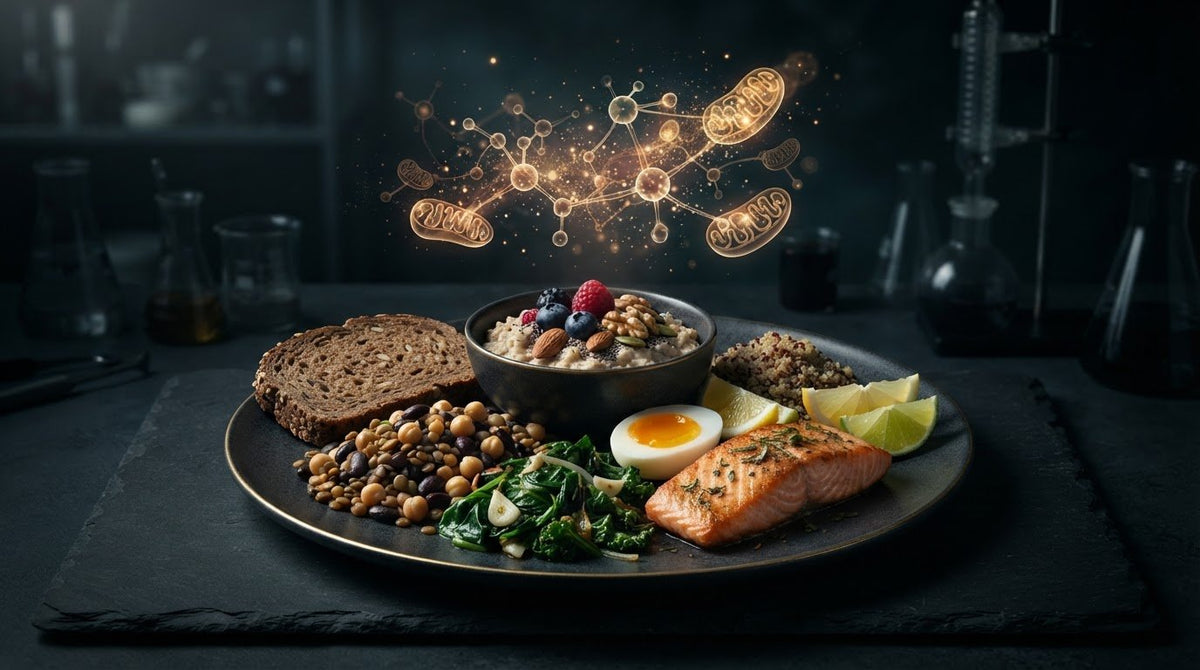
What if the best foods that boost cellular energy aren’t exotic “superfoods”, but familiar ingredients eaten as part of balanced meals? It’s understandable to look for a quick answer when your energy feels inconsistent, especially when bold claims blur the difference between a temporary lift and supporting the body’s normal energy processes.
Food provides the raw materials your cells use to produce ATP, the molecule that powers cellular activity. Mitochondria play a central role, but no single ingredient switches them into overdrive. A varied eating pattern can provide energy from carbohydrate and fat, along with nutrients involved in normal energy metabolism.
This article explains how everyday foods contribute to cellular energy, which nutrient-rich choices can help you build balanced meals, and what benefits to expect realistically. We’ll look at wholegrains, fruit and vegetables, beans, nuts and protein-rich foods, while separating useful nutrition principles from miracle-food promises. The aim is practical: meals that support your body’s ordinary energy needs, without relying on stimulants or expecting one food to fix persistent tiredness.
Key Takeaways
- Learn what cellular energy means and how it differs from the short-lived lift of a stimulant.
- Discover how carbohydrate, fat and protein can all contribute to the body’s energy supply.
- Explore foods that boost cellular energy by providing a range of nutrients, without expecting one ingredient to act as a quick fix.
- Use a simple meal-building approach to combine a staple, a protein source and fruit or vegetables, with options to suit vegetarian and vegan diets.
- Understand why consistent nourishment and broader lifestyle habits matter more than chasing a single “energy-boosting” food.
What does “cellular energy” mean, and how does food contribute?
Looking for steadier energy makes sense, particularly when tiredness affects everyday tasks. But a quick lift from a stimulant is different from the processes that supply energy for your cells’ normal work. Food provides both fuel and nutrients for these processes; no single meal or ingredient can guarantee an immediate boost. The useful question is how everyday eating contributes to energy metabolism over time.
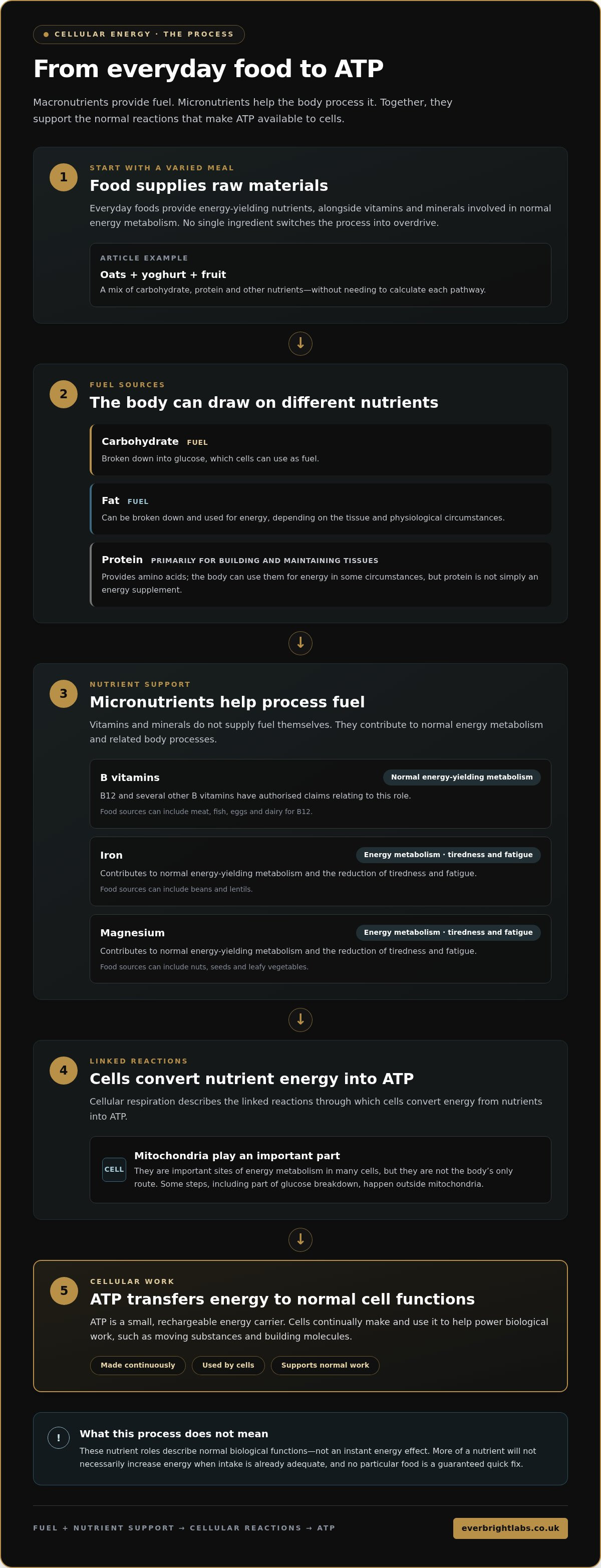
Cellular energy is the energy available to cells for their normal functions. Cells transfer energy using adenosine triphosphate, or ATP, which helps power biological work. The body continually makes and uses ATP, drawing on energy released from nutrients. So foods that boost cellular energy are best understood as foods that contribute fuel and nutrients, not as instant switches for vitality.
What are ATP and mitochondria?
Think of ATP as a small, rechargeable energy carrier: cells use it to transfer energy to tasks such as moving substances and building molecules. Mitochondria are important sites of energy metabolism in many cells. They help release energy from nutrients and make ATP, although they aren’t the body’s only route. Some steps, including part of glucose breakdown, happen outside mitochondria. Cellular respiration describes the linked reactions through which cells convert energy from nutrients into ATP.
Does eating a particular food create an instant energy boost?
Not in the same way that a quick stimulant effect can make someone feel more alert. The biochemical pathways involved in normal energy metabolism operate continuously; eating a particular food doesn’t simply switch them on. A meal provides energy, but how you feel afterwards may vary with its size and composition, as well as your sleep, recent activity and individual health. A large meal, for example, may feel different from a lighter one. That response doesn’t show that cellular energy production has suddenly increased or fallen.
Food still matters. Carbohydrate and fat can supply energy, and the body can also use protein as fuel. Nutrients from a varied diet support the wider processes involved in using that fuel. This doesn’t mean every meal needs to be optimised or that a particular food will resolve persistent low energy. It means the overall eating pattern matters more than chasing a single “energy food”.
In the next section, we’ll look at how different nutrients contribute to the body’s energy-producing pathways, then turn that information into practical food choices. The aim isn’t to promise a sudden surge, but to show how ordinary meals can provide the raw materials cells need for their normal work.
How nutrients from food support the body’s energy-producing pathways
Cells can draw on energy from several nutrients, but these fuels aren’t interchangeable in every situation. Their use depends on factors such as the tissue, activity and what the body needs at the time. Micronutrients have a different role: they help metabolic processes work rather than supplying fuel themselves.
Macronutrients provide fuel; micronutrients help the body process and use that fuel through interconnected metabolic pathways. This distinction matters because foods that boost cellular energy aren’t biochemical on-switches. A varied diet supplies both energy-yielding nutrients and the vitamins and minerals involved in normal metabolism.
How macronutrients become usable energy
Carbohydrate is broken down into glucose, which cells can use as fuel. Glucose isn’t the body’s only energy source: fats can also be broken down and used, depending on the tissue and physiological circumstances. Protein is primarily needed to provide amino acids for building and maintaining body tissues. The body can use amino acids for energy in some circumstances, but protein isn’t simply an energy supplement.
For example, oats, yoghurt and fruit provide a mix of carbohydrate, protein and other nutrients. You don’t need to calculate each pathway at every meal. Instead, include a variety of foods so the body has a range of materials available.
What roles do B vitamins, iron and magnesium play?
Some nutrients have authorised UK nutrition and health claims related to energy metabolism. Vitamin B12, for example, contributes to normal energy-yielding metabolism. Harvard T.H. Chan School of Public Health explains the role of B vitamins in energy production, including B12’s part in processes that help the body use nutrients. These claims describe normal biological functions, not an instant energy effect.
- B vitamins: B12 and several other B vitamins have authorised claims relating to normal energy-yielding metabolism.
- Iron: contributes to normal energy-yielding metabolism and the reduction of tiredness and fatigue.
- Magnesium: contributes to normal energy-yielding metabolism and the reduction of tiredness and fatigue.
These claims don’t mean that taking in more of a nutrient will increase your energy if your intake is already adequate. Food sources can include meat, fish, eggs and dairy for B12; beans and lentils for iron; and nuts, seeds and leafy vegetables for magnesium. Individual requirements and absorption vary, so supplements aren’t a substitute for a varied diet or personalised medical advice.
NAD+ also participates in cellular reactions involved in energy metabolism. For a broader discussion of that pathway, see How Does NMN Work in the Body? Everbright Labs’ Timeless NAD+ Support is a stimulant-free supplement positioned for cellular energy and healthy ageing. It doesn’t replace food or guarantee a change in how energetic you feel.
Foods that support cellular energy: a practical nutrient-rich roundup
No single food supplies every nutrient involved in energy metabolism. A varied eating pattern can bring together sources of fuel, protein, fibre and micronutrients without relying on one ingredient as an “energy booster”. These familiar options can fit into everyday meals and snacks.
Plant foods: wholegrains, pulses, leafy greens, nuts and seeds
- Wholegrains: Porridge oats, wholemeal bread and brown rice provide carbohydrate for energy, along with fibre. Wholegrains also supply B vitamins and minerals, though amounts vary by food and processing.
- Beans and lentils: Add lentils to soup or curry, or use beans in a jacket-potato filling. Pulses provide protein and fibre, as well as nutrients such as iron and folate. Iron contributes to normal energy-yielding metabolism.
- Leafy greens: Spinach, kale and spring greens add folate and other micronutrients to meals. Their nutrient content varies, so rotate them with other vegetables rather than relying on one green.
- Nuts and seeds: A small handful of unsalted nuts or seeds can add unsaturated fats, protein and magnesium. Magnesium contributes to normal energy-yielding metabolism; eating more won’t necessarily produce extra energy if your intake is already adequate.
Combining plant foods across the day helps broaden the range of nutrients in your diet. Try oats with seeds at breakfast, then a lentil dish with leafy greens later. Pairing plant sources of iron with foods containing vitamin C, such as peppers or citrus fruit, can also support iron absorption.
Animal and fortified foods: useful options for different diets
Eggs, milk, yoghurt and oily fish such as salmon or sardines offer different combinations of nutrients. Eggs and dairy can provide vitamin B12 and protein; oily fish provides protein and may supply vitamin B12, with the amount depending on the fish and portion. These foods can contribute to a varied diet, but none is essential if you choose suitable alternatives.
If you follow a vegetarian or vegan diet, check the label on fortified plant drinks and alternatives. Some provide added vitamin B12, but fortification and nutrient levels differ between products. Fortified foods can be useful sources, yet they don’t all have the same composition. Reading the nutrition information helps you compare options and choose what suits your usual meals.
These are foods that boost cellular energy only in the sense that they supply fuel and nutrients used in normal bodily processes. They don’t guarantee a noticeable lift. The practical aim is variety across meals, not finding one perfect food. Supplements are a separate option, not a replacement for food. Everbright Labs’ Timeless NAD+ Support is positioned for cellular energy and healthy ageing.
How to build everyday meals for steady energy, without chasing food myths
You don’t need a complicated plan to put nutrition principles into practice. A flexible structure can help: choose a staple, add a protein source, include fruit or vegetables, then vary your choices through the week. This makes it easier to include a range of foods without treating every meal as a formula.
A simple way to put energy-supportive foods on your plate
For breakfast, try porridge oats with berries or a chopped banana. Add plain yoghurt, milk or a suitable fortified alternative for protein, or include nuts or seeds if you enjoy them. For a plant-based option, choose a fortified soya alternative where suitable. Adjust the combination to your appetite and routine.
At lunch or dinner, use brown rice, wholemeal bread or potatoes as a base. Add lentils, beans or chickpeas, or choose fish such as salmon, then include vegetables you like. A lentil curry with brown rice and greens, or a baked potato with beans and a side salad, are straightforward options. Swap ingredients to suit your preferences, budget and what’s in the cupboard.
Think about variety across the week, not rigid rules at every sitting. Frozen vegetables, tinned beans and fish, and batch-cooked grains can make balanced meals more manageable. Vegetarian and vegan meals can follow the same structure using pulses, tofu or other preferred protein sources. You don’t need a special powder or expensive “energy food” to make a nourishing meal. Foods that boost cellular energy are ordinary ingredients that contribute fuel and nutrients, not guaranteed quick fixes.
What can food realistically change, and when is fatigue a health question?
Meal composition can help you build a varied, nourishing eating pattern, but it can’t guarantee how energetic you’ll feel. Day-to-day energy is also influenced by sleep, hydration, activity, stress and overall health. A useful first step is to notice whether your meals are regular and varied, and whether you’re drinking enough for your needs, without assuming food explains every change in energy.
If fatigue is persistent, unexplained or getting worse, speak to your GP. Tiredness can have many possible causes, and a clinician can help assess what may be behind it. Don’t try to diagnose a nutrient deficiency from symptoms alone or use supplements in place of medical assessment.
If you’re considering a supplement alongside a varied diet, explore Everbright Labs’ science-led approach to cellular energy support. Supplements aren’t a substitute for meals or medical advice, and no product can promise to resolve fatigue.
Beyond food: a measured approach to cellular energy support
Food, daily habits and realistic expectations
The central takeaway is consistency, not a search for one “boosting” food. A varied eating pattern can provide the fuel and nutrients cells use in normal processes, but it can’t guarantee a particular energy level or explain every experience of fatigue.
Daily habits are part of the wider picture. Regular movement and sufficient sleep support general health, but they aren’t guaranteed fixes for tiredness. Hydration, stress, activity levels and individual health can also influence how you feel. If low energy is persistent, unexplained or worsening, discuss it with a GP rather than assuming a particular food or supplement is the answer.
No single miracle food can replace a varied diet, steady habits and attention to your individual health. That’s a realistic way to think about foods that boost cellular energy: useful contributions to everyday nourishment, not a promise of an instant lift.
Where NAD+ support fits into the wider conversation
NAD+ is a molecule involved in cellular processes, including reactions that help cells handle energy metabolism. Its role is one part of a broader biological system, not proof that a food or supplement can reverse ageing or treat fatigue. Tiredness also doesn’t establish that someone has “low NAD+”. For more context, read about recognising signs of low NAD+, keeping in mind that symptoms alone can’t identify a specific cause.
Supplements may be an optional addition for some people, but they don’t replace varied meals, medical assessment or treatment. If you’re considering one, look for clear information about its ingredients and don’t interpret a product’s positioning as a promise of a particular outcome. Everbright Labs’ Timeless NAD+ Support is a stimulant-free supplement positioned for cellular energy and healthy ageing, not a substitute for food or medical advice.
For a closer look at the formulation, explore Timeless NAD+ Support.
Build a steady foundation for cellular energy
Foods that boost cellular energy are best understood as part of a varied eating pattern, not as miracle ingredients. Carbohydrate, fat and protein provide fuel, while micronutrients support the body’s normal energy-yielding processes. Choosing a range of familiar foods and building balanced meals is a practical foundation, without expecting one ingredient to deliver an instant lift.
How energetic you feel is influenced by more than food. Sleep, hydration, activity, stress and overall health all matter, and persistent or worsening fatigue deserves attention rather than guesswork. Supplements are optional additions, not replacements for meals or medical advice.
If you’re exploring NAD+ support as part of that wider picture, Everbright Labs’ Timeless NAD+ Support is developed by a Chemical Engineer and an Applied Biologist. It’s manufactured in GMP- and HACCP-certified UK facilities, with fully disclosed ingredients and a stimulant-free formulation. These details offer transparency, not a promise to treat fatigue or guarantee an outcome.
Explore Timeless NAD+ Support and keep building your approach around realistic, consistent choices. Small, sustainable steps can give you a clearer foundation to work from.
Frequently Asked Questions
Which foods help support cellular energy?
Foods that support cellular energy include a variety of sources of carbohydrate, protein, fibre and micronutrients. Oats, wholemeal bread, beans, lentils, leafy greens, nuts, seeds, eggs, dairy and oily fish can all contribute different nutrients. Carbohydrate and fat provide fuel, while some vitamins and minerals contribute to normal energy-yielding metabolism. Choose from across food groups rather than expecting one food to act as an instant booster.
Can food increase ATP levels directly?
No food delivers ATP straight to your cells in a way that directly raises cellular energy. Digestion breaks down nutrients, and cells use energy from these nutrients to make ATP through interconnected metabolic pathways. Carbohydrate, fat and, in some circumstances, protein can contribute fuel. The body continually makes and uses ATP, so a meal supplies materials for these processes rather than switching them on like a button.
Do bananas boost cellular energy?
Bananas provide carbohydrate, which the body can use as fuel, so they can be a convenient snack. They also contain potassium, a mineral with an authorised UK health claim relating to normal muscle function. But a banana isn’t a special cellular-energy switch, and it won’t guarantee an immediate lift. Pair it with yoghurt or nuts if you’d like a snack that also provides protein or fat.
What should I eat when I feel tired?
If you’re hungry, choose a manageable meal or snack with a source of carbohydrate and, where practical, protein. For example, try wholemeal toast with eggs, or fruit with yoghurt; beans on a baked potato can make a more substantial meal. Have a drink if you may be thirsty. Food may help meet your needs, but it won’t necessarily resolve tiredness, which can have many causes.
Can a deficiency affect energy levels?
Yes. Inadequate levels of certain nutrients, including iron or vitamin B12, can be associated with tiredness, but feeling tired doesn’t establish that you have a deficiency. Iron and vitamin B12 contribute to normal energy-yielding metabolism, and iron also contributes to the reduction of tiredness and fatigue. If fatigue is persistent, unexplained or worsening, speak to your GP rather than self-diagnosing or starting supplements as a substitute for assessment.
Do NAD+ supplements replace foods that support cellular energy?
No. NAD+ supplements don’t replace a varied diet, medical advice or treatment. NAD+ is involved in cellular processes, including energy metabolism, but taking a supplement doesn’t guarantee that you’ll feel more energetic or identify the cause of fatigue. Timeless NAD+ Support is an optional supplement positioned for cellular energy and healthy ageing. Consider supplements as a separate choice, not as a substitute for nourishing meals.
How quickly can foods make you feel more energetic?
There’s no set timeframe, and eating a particular food can’t guarantee an immediate change in how energetic you feel. A meal provides nutrients for the body’s ongoing energy processes, while your response can vary with hunger, meal size, sleep, activity and overall health. A snack may help if you’re hungry, but persistent or worsening fatigue shouldn’t be managed by repeatedly trying “energy foods”. Consider discussing it with your GP.
Share:
Combining Supplements and Diet for Best Results
Supplements for Active Over-50s in the UK: Science-Led Guide