


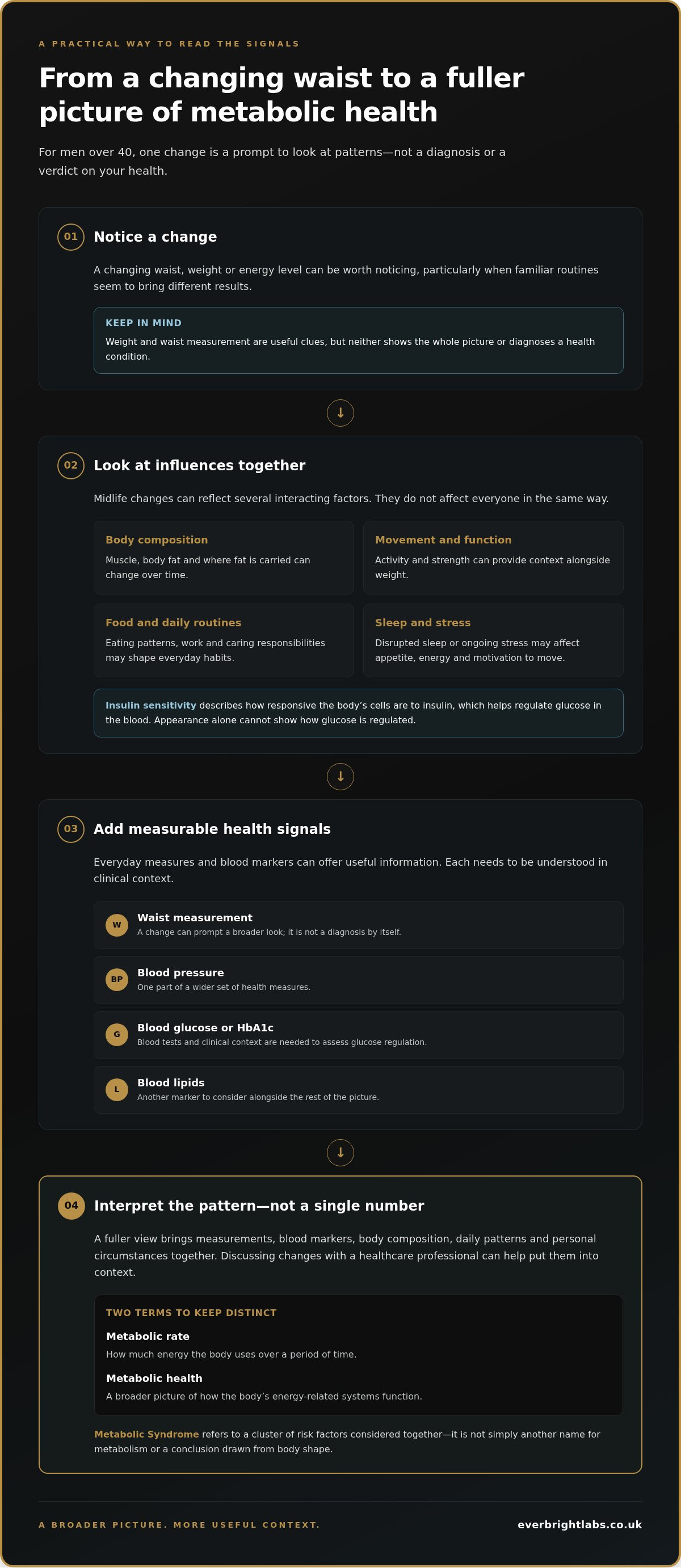
What if a changing waist after 40 is a signal to understand, not proof that your metabolism has failed? If familiar routines no longer seem to produce familiar results, it’s understandable to wonder whether age, changes in muscle or hormones are playing a part. Metabolic health for men over 40 isn’t a pass-or-fail judgement based on weight alone. It’s a broader pattern of factors that can be measured, discussed and supported over time.
This guide explains what metabolic health means in midlife, what can influence it, and why cardiovascular, kidney and metabolic markers are increasingly considered together. You’ll learn which everyday measures can help you notice trends, what to discuss with your GP, and how realistic changes to food, movement, sleep and other routines can support your health. The aim isn’t to promise a quick fix or blame you for biology. It’s to make the evidence easier to understand and help you identify practical next steps that fit real life.
Key Takeaways
- Metabolic health for men over 40 involves more than body weight; several measures together can offer a fuller picture.
- Muscle, fat distribution and insulin sensitivity all relate to metabolic function, but appearance isn’t a diagnosis.
- Waist measurement, blood pressure, blood glucose or HbA1c, and blood lipids can offer useful information, but need clinical context.
- A manageable routine can build consistency with movement, strength-building activity, balanced meals and sleep.
- Supplements are optional support within a wider approach, not a replacement for everyday habits or individual medical care.
What does metabolic health mean for men over 40?
A changing waistline, weight or energy level can be frustrating, especially if your routines haven’t changed much. These shifts may reflect changes in body composition, activity, sleep or other aspects of health. They aren’t proof that you’ve failed, or that decline is inevitable. Metabolic health for men over 40 is best understood as a wider picture of how the body handles energy and regulates related processes, rather than a judgement based on appearance alone.
Body weight is one piece of information, but it can’t show the whole picture. Two men of similar weight may differ in muscle and fat distribution, fitness, blood markers and other health factors. A change in weight or waist measurement can be a useful prompt to look at patterns, not a diagnosis in itself. The term Metabolic Syndrome describes a cluster of risk factors considered together; it isn’t simply another name for metabolism or a conclusion drawn from body shape.
In brief: metabolic rate describes how quickly the body uses energy; metabolic health describes how well its broader energy-related systems function.
Metabolism, metabolic rate and metabolic health: what is the difference?
Metabolism is the network of chemical processes that keeps the body working, including converting nutrients into usable energy and using that energy to support movement, repair and temperature regulation. Metabolic rate is narrower: it refers to the amount of energy the body uses over a period of time. It varies with factors such as body size, composition and activity, but it isn’t a simple score for overall health.
For example, a brisk walk increases energy use while you’re moving. That tells you something about energy expenditure, but not by itself how your body regulates blood glucose or how other health indicators look. Metabolic health needs a broader view.
Why can metabolic health feel different after 40?
Midlife can bring gradual changes in muscle and fat distribution, while work, caring responsibilities or discomfort may affect how much you move. Sleep patterns and everyday behaviours can shift too. These influences may interact, so familiar routines can sometimes lead to different results. They don’t affect everyone in the same way, and age alone cannot determine an individual’s metabolic health or future.
Energy is also influenced by more than metabolism. A persistent change in how you feel deserves attention rather than an assumption that it’s simply part of getting older. Looking at health markers and daily patterns can help put changes into context, alongside a conversation with a healthcare professional when needed.
For a closer look at age-related influences, read about the reasons metabolism changes after 40. The key point is that age is one factor among several, not a verdict on what your body can do next.
How muscle, body composition and daily routines shape men’s metabolic health
A change on the scales can reflect several things, not just an assumed “slowing metabolism”. Muscle, body fat and where fat is carried can all change over time, while activity and eating patterns influence how the body uses energy. These factors interact, so no single feature of someone’s body tells the whole story. Muscle is metabolically active, but having more muscle or a particular body shape doesn’t guarantee good health.
Fat distribution can add useful context. Fat carried around the abdomen may be relevant to health risk, but waist size is not a diagnosis either. Clinicians consider it alongside other measures and personal circumstances. Similarly, weight changes don’t automatically mean muscle has been lost: shifts in activity, food intake, health, sleep and other factors may contribute. Looking at trends and function can be more informative than treating one measurement as a verdict.
Insulin sensitivity is another part of the picture. It describes how responsive the body’s cells are to insulin, which helps regulate glucose in the blood. It can’t be reliably diagnosed by looking at someone’s weight or build. Blood tests and clinical context are needed to assess glucose regulation; outward appearance alone doesn’t reveal the full picture.
How can muscle and body composition affect energy use?
Muscle uses energy to maintain and support movement, and its amount can influence the body’s overall energy requirements. Strength and everyday function, such as carrying shopping or getting up from a chair, provide useful context alongside weight. If routines change, the balance of muscle and fat may also shift, but not every midlife weight change is caused by muscle loss. A broader view helps avoid assumptions.
What roles can sleep, stress and routine play?
Short or disrupted sleep and ongoing stress may affect appetite, motivation to be active and the choices that feel manageable during a busy day. Work patterns, caring responsibilities and time for movement or meal preparation can shape routines too. These are possible contributors, not a complete explanation for an individual’s symptoms or health markers.
Daily influences can reinforce one another. A stressful period may disrupt sleep; feeling tired may make movement less appealing; a less active routine can then affect energy use and body composition. Food patterns matter in this same system, providing both energy and nutrients that support normal bodily functions. This isn’t a reason to blame yourself. It’s a reminder that health is shaped by circumstances as well as individual habits.
Age can influence the body, but metabolic health reflects the combined effects of body composition, activity, food patterns, sleep, stress and individual health, not age alone. For men over 40, noticing a change is a reason to seek context, not to assume that progress is no longer possible. Start by identifying one part of your routine that feels realistic to work on, rather than trying to change everything at once.
If you’re considering a supplement as one optional part of a broader approach, Fat Metaboliser for metabolic support is a stimulant-free option. It isn’t a replacement for food, activity, sleep or individual medical care.
Which metabolic health measures matter, and what can they tell you?
No single number can summarise metabolic health for men over 40. Measurements offer different clues, and clinicians interpret them together with your medical history, medicines, family history and other risk factors. A result outside a reference range doesn’t, by itself, establish a diagnosis; equally, one reassuring result can’t confirm overall health.
The measures below can help you understand what a health check may cover. They’re starting points for a conversation, not targets to assess yourself against without clinical advice.
| Measure | What it may indicate | Why context matters |
|---|---|---|
| Waist measurement | Provides information about abdominal size and fat distribution. | How and where it’s measured can affect the result; it’s considered alongside other indicators, not used alone. |
| Blood pressure | Shows the force of blood against artery walls and can help identify a pattern of raised pressure. | Readings can vary with factors such as posture, recent activity and measurement conditions. A clinician may consider repeat readings. |
| Blood glucose or HbA1c | Indicates blood glucose at the time of a test, or, with HbA1c, an estimate of average glucose over the preceding few months. | Results are interpreted in light of the test, health history and clinical guidance. They don’t explain every aspect of metabolic function. |
| Blood lipids | Measures types of fats in the blood, such as cholesterol and triglycerides. | The pattern is considered alongside other risk factors, rather than treated as a standalone verdict. |
What can waist measurement and blood pressure show?
These measures answer different questions. Waist size offers one clue about body-fat distribution, while blood pressure reflects circulation. Neither can substitute for the other, and there isn’t one universal interpretation suitable for every person. Measurement technique matters: a tape placed differently or a blood-pressure reading taken under different conditions may affect the result. Discuss readings that concern you, or a change over time, with your GP or another healthcare professional.
What do blood glucose and lipid tests add?
HbA1c helps assess longer-term blood glucose rather than capturing just one moment, but a clinician must interpret it appropriately. Lipid results add information about blood fats and cardiovascular risk; they don’t reveal overall metabolic health on their own. Your clinician can explain what the particular results mean for you and whether further assessment or follow-up is appropriate.
Metabolic syndrome refers to a combination of risk factors, so one waist measurement, blood-pressure reading or test result cannot diagnose it or establish your overall health. If you have results from different dates, bring them to a GP appointment rather than comparing them without context. Ask what each measure means, whether it should be repeated and how your personal risk factors shape the interpretation. This turns numbers into a useful discussion, without treating a single result as a final judgement.
How can men over 40 support metabolic health in everyday life?
Knowing what influences your health is useful; turning that knowledge into a manageable routine is the next step. Metabolic health for men over 40 isn’t supported by one perfect meal or an intense burst of exercise. Notice your current patterns, choose one change you can maintain, then review how it fits your life. Progress can be assessed through habits and relevant clinical measures, not daily weigh-ins alone.
Which habits make a practical starting point?
Use this sequence to make change specific without making it rigid. If a health condition, injury or mobility concern affects what feels appropriate, seek individual advice before changing your activity.
- Observe your usual week. Notice when you move, how often you have time to prepare meals, and whether sleep is regularly disrupted. A brief note on your routine can reveal realistic opportunities without judging yourself.
- Choose one manageable goal. You might add a walk to part of a regular journey, take movement breaks during a desk-based day, or include a strength-building activity suited to your ability. Choose something you can repeat, rather than an ambitious plan that competes with work or family responsibilities.
- Build consistency around daily life. Regular movement and strength activity can support fitness and function. For meals, aim for satisfying combinations that include vegetables or fruit, a source of protein and higher-fibre foods where practical. There’s no need to impose restrictive rules or expect rapid changes in weight.
- Review what’s working. Once a routine feels familiar, consider whether it’s sustainable and make a small adjustment if needed. Track actions such as walks, strength sessions and sleep routines, alongside energy or day-to-day function. Use weight, waist measurements and clinical results as context, not as a daily score.
Sleep belongs in the plan too. A regular wind-down routine or a more consistent bedtime may be a reasonable first experiment if your schedule allows. Keep the goal realistic; an approach that works on ordinary, busy days is often more useful than a strict programme you can only follow occasionally.
When should you discuss metabolic changes with a GP?
Consider arranging a GP conversation if a change in weight or energy persists, has no clear explanation, or is affecting daily life. The same applies if readings such as blood pressure or blood-test results raise concern. A change after 40 doesn’t automatically signal illness or mean you need tests, but it’s reasonable to ask for help interpreting an ongoing concern.
Your GP can consider your medical and family history, symptoms, medicines and any existing results together, then decide whether further assessment is appropriate. Bring a short record of what has changed, when you noticed it and any measurements you already have. Online information can help you prepare questions, but it can’t diagnose the cause of symptoms or replace personal clinical advice.
For an optional supplement within a wider approach, explore Fat Metaboliser for metabolic support. It’s stimulant-free, but supplements don’t replace balanced meals, movement, sleep or individual medical care.
Where can supplements fit into a measured approach to metabolic health?
Supplements are optional. They may have a place in someone’s routine, but they can’t replace balanced nutrition, regular activity, adequate sleep or individual medical care. If you’re trying to understand metabolic health for men over 40, start with the foundations and any clinical advice relevant to you. A supplement shouldn’t be treated as a shortcut, a diagnosis or a substitute for investigating persistent changes.
It also helps to separate a product’s stated purpose from what you can reasonably expect. “Metabolic support” is general language, not a promise to change a particular health marker or resolve a medical concern. Individual responses can vary, and a supplement shouldn’t be assumed to deliver a particular result.
How should you assess supplement claims?
Read the product information carefully. Look for clear ingredient details and claims that are measured and consistent with the evidence available for those ingredients. Be cautious of language promising rapid weight change or suggesting a supplement can prevent, treat or cure a health condition. Those are very different claims from describing a product as intended to support a normal body function.
If you take medicines, have a health condition, or are unsure whether a supplement is appropriate for you, seek advice from a GP or pharmacist. This is especially useful before adding something new to an established care plan. Don’t stop prescribed treatment or delay a clinical conversation in favour of a supplement.
What role can Fat Metaboliser play?
Everbright Labs’ Fat Metaboliser is a stimulant-free supplement designed for metabolic support. It can be considered as one optional part of a wider routine, not a standalone solution or a guaranteed way to change weight, waist size or test results. Food, movement, sleep and appropriate healthcare remain central to a measured approach.
Everbright Labs products are manufactured in UK facilities certified to GMP and HACCP standards, and use fully disclosed ingredients. These standards relate to manufacturing; they don’t establish that a supplement will produce a specific health outcome. Keeping that distinction clear helps you weigh product information without confusing it with proof of personal benefit.
Before choosing a supplement, consider whether its stated purpose fits your needs, whether the claims are realistic, and whether it’s appropriate alongside your health circumstances. If you’re looking for a stimulant-free product designed for metabolic support, you can explore Fat Metaboliser. Keep expectations measured, and discuss personal health concerns with a healthcare professional rather than relying on a supplement to address them.
Choose your next step with confidence
Make your next move small enough to repeat. Choose one routine to focus on this week, such as adding a regular walk or planning a balanced meal you enjoy. Give it room to become part of everyday life before deciding what to adjust. A steady, observant approach is more useful than expecting a single change to transform your health overnight.
That measured mindset also guides Everbright Labs. Founded and formulated by a Chemical Engineer and an Applied Biologist, the company brings scientific expertise to its supplement development. Any supplement remains optional, and its role should be considered alongside your individual needs and the habits that support wellbeing.
Metabolic health for men over 40 isn’t a fixed outcome decided by a birthday or one number. You can keep learning about your own patterns, make realistic changes and seek professional guidance when you need it. For a considered next step, explore Fat Metaboliser for metabolic support. Small, sustainable choices can help you move forward with confidence.
Frequently Asked Questions
Is weight gain after 40 inevitable for men?
No. Weight gain isn’t an unavoidable result of turning 40, though changes in activity, sleep, muscle and daily routines may affect body weight over time. The pattern differs between individuals. If your weight is changing, consider the broader context, such as a new medicine, altered routine or persistent symptoms, rather than assuming age is the sole cause. A GP can help assess changes that are unexplained or concerning.
Can you have poor metabolic health at a normal weight?
Yes. A weight within a commonly used range doesn’t guarantee that blood pressure, glucose or lipid results are healthy. These factors aren’t visible from body size alone, which is why a person can feel well and still benefit from appropriate health checks. Equally, a measurement outside a reference range isn’t a diagnosis by itself. A clinician can interpret results in context and advise whether follow-up is appropriate.
How can men over 40 check their metabolic health?
Ask your GP or practice nurse which checks suit your age, medical history and personal risk factors. Depending on your circumstances, a health review may include blood pressure, waist measurement, blood tests or a discussion of family history and medicines. Keep a record of previous readings if you have them, including when they were taken. Comparing results over time can be more informative than interpreting one number in isolation.
Does low testosterone always cause metabolic changes after 40?
No. Low testosterone isn’t the inevitable explanation for weight or energy changes in midlife, and symptoms such as tiredness or reduced libido can have several possible causes. A clinician will consider symptoms and medical history before deciding whether hormone testing is appropriate. Don’t use one symptom or an online checklist to diagnose low testosterone, and avoid starting hormone products without medical assessment and guidance.
Can supplements improve metabolic health for men over 40?
Some supplements are marketed for metabolic support, but they shouldn’t be treated as a replacement for food, activity, sleep or medical care, or as a guaranteed way to change test results. Everbright Labs’ Fat Metaboliser is a stimulant-free supplement designed for metabolic support. If you take medicines or manage a health condition, discuss suitability with a GP or pharmacist before adding a supplement to your routine.
When should a man over 40 speak to a GP about weight or energy changes?
Arrange a GP discussion if a change persists, has no clear explanation, affects daily life or is accompanied by other symptoms. Seek advice about readings that concern you too, rather than relying on an online calculator to diagnose a problem. It may help to note when the change began, any new medicines and how it affects you. Your GP can decide whether assessment or follow-up is needed.
Share:
Cellular Health Supplements UK: What’s Inside and Why
Can’t Lose Weight Even with a Calorie Deficit? What to Check