


The safest first step towards weight loss without heart palpitations may be to pause and understand the changes in your heartbeat, rather than switch straight to another product. If a supplement or restrictive eating plan has left you worried about your heart, that concern is understandable. Stimulants can be one possible trigger, but palpitations can have other causes too. It may not be possible to identify the reason without medical advice.
This guide explains what may contribute to palpitations during weight loss, which symptoms call for urgent medical help, and how to discuss recurring episodes with a GP, pharmacist or other clinician. It compares approaches that don’t rely on stimulants, from sustainable changes to weight-management products, and explains why “stimulant-free” doesn’t automatically mean suitable for everyone.
You’ll also find practical details to check, including a product’s full ingredient list and possible interactions with medicines. The aim is to help you make informed choices, not to diagnose palpitations or treat them with a supplement. If symptoms are happening now or are worrying you, seek appropriate medical advice before making weight loss your next priority.
Key Takeaways
- Palpitations describe a sensation, not a diagnosis. Noting when they occur can help a clinician assess them.
- Consider possible links with dieting or weight-loss products without assuming a trigger is the cause.
- Compare stimulant-containing products, stimulant-free supplements and lifestyle approaches, including their evidence limits and practical considerations.
- Use a symptom-first plan to review new supplements and decide when to seek professional advice before changing your weight-management approach.
- Weight loss without heart palpitations starts with informed choices. Check a supplement’s full ingredient list and discuss suitability with a healthcare professional.
Weight loss without heart palpitations starts with understanding the symptom
Feeling your heart race, pound or flutter can be unsettling, particularly when you’re trying to lose weight. Palpitations describe the sensation of noticing your heartbeat. They aren’t a diagnosis and don’t, by themselves, show what is causing the feeling. For a general overview, see Palpitation.
There can be different explanations, and it isn’t possible to identify one from the sensation alone. A supplement, a change in eating habits or anxiety might be relevant in some cases, but none should be assumed to be the cause. Recurring or concerning symptoms deserve clinical assessment. Understanding the symptom is a sensible first step towards weight loss without heart palpitations, but it can’t replace medical advice.
What do heart palpitations feel like?
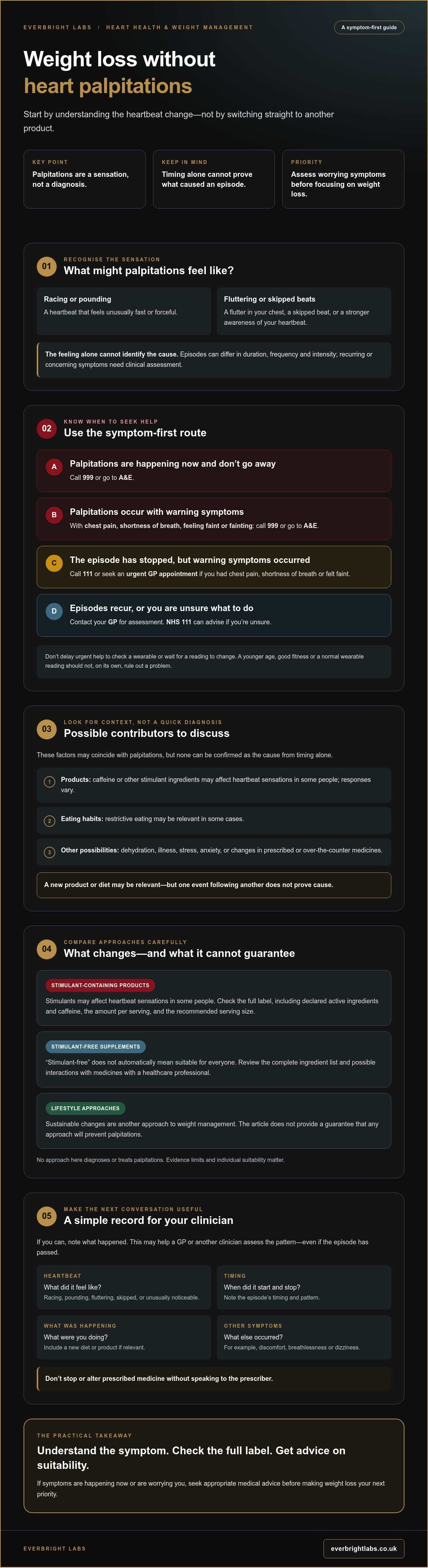
You might notice a racing or pounding heartbeat, a flutter in your chest, a skipped beat, or simply a stronger awareness of your heart beating. Episodes can differ in duration, frequency and intensity. These descriptions can help you explain what you’re experiencing to a clinician, but they can’t diagnose the cause.
If you can, note when an episode starts and stops, what you were doing, and whether anything else happened at the same time. Include symptoms such as discomfort, breathlessness or dizziness. This record may help a GP or another clinician assess the pattern, even if the episode has passed.
When should palpitations prompt urgent medical help?
The NHS advises calling 999 or going to A&E if palpitations are happening and don’t go away, or if they occur with chest pain, shortness of breath, feeling faint or fainting. These symptoms need urgent attention. Don’t delay seeking help to check a wearable or wait to see whether a reading changes.
If the palpitations have stopped but you experienced chest pain, shortness of breath or felt faint, NHS guidance is to call 111 or seek an urgent GP appointment. For recurring episodes without these emergency symptoms, contact your GP for assessment. NHS 111 can advise if you’re unsure what to do. Follow current advice from the NHS at Heart palpitations.
A younger age, good fitness or a normal wearable reading shouldn’t be used on its own to rule out a problem. If symptoms feel severe or you’re worried about immediate safety, seek urgent help. The priority is assessing the symptom, not deciding whether a diet or product is responsible.
Why weight-loss products and dieting may coincide with palpitations
Noticing palpitations after starting a diet or taking a new product can make the connection seem obvious. But one event following another doesn’t prove cause. As a useful rule, timing alone cannot establish what caused a palpitation episode. A new supplement may be relevant, but symptoms can have several possible explanations. Recurring episodes need clinical assessment rather than guesswork.
Can caffeine and stimulant ingredients affect heartbeat sensations?
Caffeine and other stimulant ingredients may affect heartbeat sensations in some people, but responses vary and stimulants don’t explain every episode. If you use a weight-loss product, check the full label for caffeine and other declared active ingredients, including the amount per serving and the recommended serving size. Don’t assume that a product’s name or marketing description tells you everything it contains. For more on this particular concern, consult a dedicated guide to stimulant-based diet-pill risks.
Even a clearly labelled ingredient list can’t establish whether a product caused your symptoms. If palpitations began after introducing a non-prescribed supplement, note the timing and seek appropriate advice, particularly if symptoms recur or concern you.
Could dieting, dehydration, or medicines also matter?
These factors could be relevant, but none can be confirmed as the cause from timing alone. Restrictive eating, dehydration, illness or stress may coincide with palpitations, as may changes in prescribed or over-the-counter medicines. These are possibilities to discuss with a healthcare professional, not a checklist for diagnosing yourself. Don’t stop or alter prescribed medicine without speaking to the prescriber.
A short, factual record can make a clinical conversation more useful. Note:
- when symptoms happen and how long they last
- recent changes to meals, fluid intake or activity
- supplements and medicines taken, including serving amounts where shown
- illness, stress or other symptoms around the same time
This information may help a GP, pharmacist or other clinician assess possible connections alongside your health history. If symptoms recur, seek advice rather than trying to identify the cause by removing several foods or products at once. A careful review supports informed choices about weight loss without heart palpitations, but it doesn’t replace medical assessment.
Stimulant-free weight loss: what it changes and what it cannot guarantee
Choosing an approach without stimulants can reduce exposure to ingredients such as caffeine, but it doesn’t establish why palpitations happen or guarantee they’ll stop. Nor does it guarantee weight loss. Compare options by what they contain and how they fit your health needs, not by promises on the front of a pack.
| Approach | Stimulant exposure | Evidence and practical considerations | When to seek advice |
|---|---|---|---|
| Stimulant-containing products | May contain caffeine or other stimulant ingredients. | Check the full ingredients and amount per serving. Responses can differ, and marketing claims don’t prove a product’s effects. | Ask a pharmacist or clinician if you have symptoms, a health condition or take medicines. |
| Stimulant-free supplements | Intended to avoid stimulant ingredients, but check the current full label. | Stimulant-free doesn’t mean side-effect-free or interaction-free. Research on an individual ingredient doesn’t establish the benefits of a finished product or its specific formulation. | Discuss suitability with a healthcare professional, especially if you have a condition or take medicines. |
| Non-supplement lifestyle support | No supplement-related stimulant exposure. | Food choices, regular activity and sustainable routines avoid relying on a weight-management supplement, but still need to suit your circumstances. | Seek professional guidance if symptoms recur or health needs make changes difficult. |
How do the approaches differ?
“Stimulant-free” describes an ingredient profile, not a medical safety guarantee. Read the complete ingredient list and serving directions rather than relying on front-label wording. A health condition, prescribed medicine or another supplement may affect whether an option is appropriate for you. If palpitations recur, prioritise clinical advice before choosing a product.
What should you expect from a weight-management supplement?
A supplement can’t replace sustainable habits or medical care, and no product should be assumed to prevent palpitations. For weight loss without heart palpitations, avoiding stimulants may be one consideration, not a promise of symptom relief. If you’re reviewing a stimulant-free option, you can check the Fat Metaboliser product information and discuss its current label with a healthcare professional. Reviewing a product is not a substitute for assessing symptoms.
A safer step-by-step plan if you want to lose weight without palpitations
If palpitations start during a weight-management change, pause and assess the symptom before deciding what to change next. A measured plan can help you share useful information with a clinician and avoid making several changes at once.
- Respond to symptoms first. If palpitations are happening with chest pain, breathlessness, fainting or severe dizziness, seek urgent help. Follow current NHS advice rather than waiting to investigate a product or diet.
- Review possible exposures. If symptoms begin after starting a non-prescribed supplement, pause it and seek appropriate advice. Note recent changes to food, fluids, activity and other products. Don’t stop or alter prescribed medicines on your own.
- Speak with a healthcare professional. Contact a GP or pharmacist about recurring or concerning episodes. Share your symptom record, product labels, medicine list and relevant health history so they can assess the context.
- Reassess your weight-management choices. After discussing the symptoms, consider which approach may be appropriate for you. Sustainable eating patterns, activity, sleep and practical support can all be part of that conversation, without assuming one plan suits everyone. For those seeking clinical guidance rather than over-the-counter fat burners, specialised providers such as Medi Slim offer physician-supervised medical weight loss programmes.
What information should you bring to a GP or pharmacist?
Record when each episode began, how long it lasted, how often it happens and what you were doing at the time. Note any accompanying symptoms. Bring the supplement packaging or a clear photograph of the complete ingredient list and serving instructions, alongside a list of prescribed medicines and other products you take. This information can help a clinician review possible connections, but it can’t establish the cause by itself.
How can you assess a product before trying it?
Read the complete ingredient declaration, serving guidance and warnings, and check who makes the product. Don’t rely on terms such as “natural” or “stimulant-free” as proof that it will be suitable for you. If you take medicines or manage a health condition, ask a pharmacist or clinician to review the product before starting it. Supplements aren’t a substitute for medical assessment.
For weight loss without heart palpitations, product checks are only one part of a symptom-led approach. If you’re reviewing an option, review Fat Metaboliser’s product information and discuss its current label with a healthcare professional where appropriate. This is not a treatment for palpitations or a guarantee of weight loss or freedom from side effects.
Considering a stimulant-free supplement such as Everbright Labs Fat Metaboliser
After considering your symptoms and seeking medical advice where needed, you may want to review the ingredients in a weight-management supplement. Everbright Labs describes Fat Metaboliser as stimulant-free. That description is a starting point for checking whether the product fits your circumstances, not evidence that it will prevent palpitations or produce weight loss.
What does stimulant-free mean when reviewing Fat Metaboliser?
Check the current product label and full ingredient information before relying on claims about caffeine or any other ingredient. Consider the formulation and serving instructions together, and review the label for warnings as well as ingredients. You can read the Fat Metaboliser ingredient breakdown as part of that review.
Stimulant-free doesn’t mean side-effect-free, interaction-free or suitable for everyone. Individual ingredients may matter if you have a health condition or take prescribed medicines. No ingredient or formulation should be understood as diagnosing or treating palpitations, preventing a heart condition, or guaranteeing that symptoms won’t occur. A supplement is not a substitute for medical assessment.
Who should seek professional advice before using a supplement?
If you have recurring palpitations, a diagnosed health condition or take prescribed medicines, ask a GP or pharmacist about suitability before starting a supplement. Share the current label and serving instructions, along with details of your medicines and symptoms. Don’t stop prescribed treatment or assume a product is appropriate simply because it’s described as stimulant-free.
If palpitations occur with chest pain, breathlessness, fainting or severe dizziness, prioritise urgent medical care over researching products. For weight loss without heart palpitations, a supplement can only be one choice to assess after symptom-led advice, not a shortcut around it.
If you’ve reviewed these limitations and want to learn more about Everbright Labs, explore Everbright Labs. Read the product information carefully and discuss personal suitability with a qualified healthcare professional where appropriate.
Make your next step an informed one
Working towards weight loss without heart palpitations starts with taking symptoms seriously, not guessing at their cause. Palpitations can have different triggers, so seek urgent help for warning signs and speak with a healthcare professional about recurring episodes. A clear record of symptoms, medicines and supplement labels can make that conversation more useful.
Stimulant-free describes an ingredient profile, not a guarantee of weight loss, heart safety or freedom from side effects. Review the full, current product label and ask a GP or pharmacist about suitability, particularly if you have a diagnosed condition or take medicines.
Everbright Labs says it was founded and formulated by a Chemical Engineer and an Applied Biologist, and that its products are made in GMP and HACCP certified UK facilities. The company also describes its formulations as fully disclosed and stimulant-free, but check the current label for product-specific information. Supplements don’t replace medical assessment.
To learn more about the company and its approach, explore Everbright Labs. Take your next step with careful, symptom-led decisions and appropriate support.
Frequently Asked Questions
Can you lose weight without heart palpitations?
Yes, weight loss is possible without experiencing palpitations, but no approach can guarantee that symptoms won’t occur. Sustainable eating and activity habits may support weight management without relying on stimulant products. If palpitations happen, don’t assume they’re caused by your diet or supplement, or that changing your plan will resolve them. Seek medical advice for recurring symptoms, and prioritise urgent help if palpitations come with warning signs.
Can caffeine or fat burners cause heart palpitations?
Caffeine and other stimulant ingredients may trigger heartbeat sensations in some people, but responses differ and they aren’t the explanation for every episode. “Fat burner” products can contain different ingredients, so check the full label and serving directions rather than relying on the product name. If symptoms follow starting a product, note the timing and ask a GP or pharmacist for advice, particularly if palpitations recur or you take medicines.
Are stimulant-free weight-loss supplements safe if I have palpitations?
Not necessarily. Stimulant-free means the product is intended to avoid stimulant ingredients, but it doesn’t mean side-effect-free, interaction-free or suitable for everyone. If you have recurring palpitations, a diagnosed health condition or take prescribed medicines, ask a GP or pharmacist to review the complete ingredient list and serving instructions before using a supplement. It can’t diagnose or treat palpitations, or guarantee weight loss or symptom prevention.
What should I do if palpitations start after taking a supplement?
If symptoms begin after you start a non-prescribed supplement, pause it and seek appropriate advice from a GP or pharmacist. Keep the packaging or take a clear photograph of the full ingredients and serving directions. Record when symptoms began, how long they lasted and any other symptoms. Don’t stop prescribed medicines without speaking to the prescriber. If urgent warning symptoms occur, seek emergency help rather than investigating the product first.
When should I call 999 or NHS 111 for heart palpitations?
Call 999 or go to A&E if palpitations are happening and don’t go away, or occur with chest pain, shortness of breath, feeling faint or fainting. If the palpitations have stopped but you had chest pain, breathlessness or felt faint, NHS advice is to call 111 or seek an urgent GP appointment. For recurring episodes without emergency symptoms, contact your GP. NHS 111 can advise if you’re unsure what to do.
Can dehydration or dieting cause a racing heartbeat?
Dehydration or restrictive dieting may be relevant to a racing heartbeat, but neither can be identified as the cause from symptoms alone. Other factors, including illness, stress or medicines, may also matter. Avoid extreme changes while you’re trying to work out what’s happening. Note changes to eating, fluid intake, supplements and activity, then share that information with a healthcare professional, especially if symptoms recur.
Will stopping caffeine stop heart palpitations?
Not necessarily. If caffeine contributes to symptoms for you, reducing or avoiding it may help, but palpitations have varied possible causes and can continue for other reasons. Check for caffeine in drinks and product labels, and discuss recurring symptoms with a GP or pharmacist rather than relying on self-testing alone. Seek urgent help if palpitations occur with chest pain, breathlessness, feeling faint or fainting.
Share:
Signs of a Slowing Metabolism: What Your Symptoms Can, and Cannot, Tell You
GMP-Certified Supplements in the UK: What GMP Means in 2026