

Thirty isn’t a biological cliff, and feeling more tired in your thirties doesn’t prove your cells are running out of energy. Research suggests that mitochondrial function can vary with age and activity levels. A June 2026 study from the University of Colorado Anschutz, for example, found lower mitochondrial function in healthy but sedentary men in their early forties than in active men of the same age. That’s one reason the question of cellular energy decline over 30 deserves a measured answer, not an anti-ageing promise.
If your energy feels different, it’s understandable to look for an explanation. But cellular processes don’t provide a direct explanation for everyday fatigue, and supplement claims can make the evidence seem more settled than it is. This article explains what cellular energy means, what research can and can’t tell us about age-related changes, and why symptoms alone don’t identify a cellular cause.
We’ll also look at practical ways to support general health and where evidence-led options, including NAD+ precursors, may fit. Human trials show these can raise NAD+ levels, but whether that translates into meaningful health benefits remains under study. The aim is a clear, realistic picture, without treating 30 as a deadline or supplements as a reset button.
Key Takeaways
- Cellular energy describes processes inside cells, not a direct measure of how energetic you feel day to day.
- Understand why cellular energy decline over 30 isn’t a universal turning point, and how to interpret age-related research carefully.
- See how NAD+ and mitochondria contribute to energy production without mistaking a coenzyme for an energy source.
- Explore practical ways to support general health through activity, recovery, sleep and balanced nutrition.
- Learn what to consider before using a supplement, including the limits of the evidence and the ingredients in Timeless NAD+ Support.
Does cellular energy decline over 30, or is 30 an arbitrary milestone?
If you’ve noticed changes in stamina or recovery since your twenties, it’s reasonable to wonder whether your biology has shifted. But cellular energy decline over 30 doesn’t mean there’s a universal change that switches on at a particular birthday. Thirty is a convenient point to discuss adulthood, not a recognised threshold at which everyone’s cells suddenly begin producing less energy.
It also helps to separate what happens inside cells from how you feel. Everyday tiredness can be influenced by sleep, stress, illness, medication, workload and many other factors. It isn’t a direct reading of mitochondrial activity, and it can’t by itself diagnose a problem with cellular energy production.
What does cellular energy mean in the body?
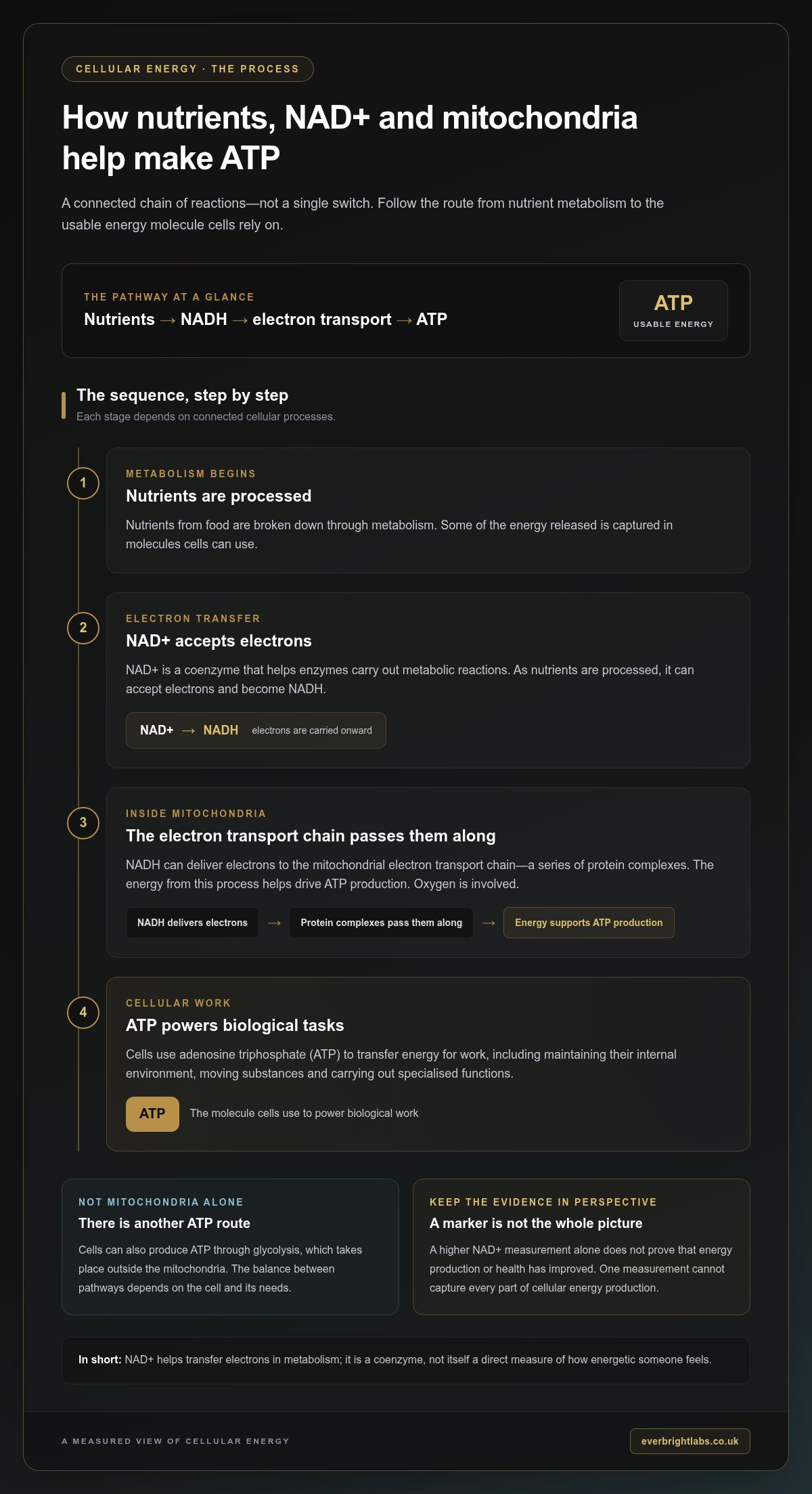
Cellular energy is the set of processes by which cells convert nutrients into usable energy for biological work; it isn’t the same thing as feeling alert or tired. One key molecule in this system is adenosine triphosphate, or ATP. Cells use ATP to transfer energy for tasks such as maintaining their internal environment, moving substances and carrying out specialised functions.
Mitochondria contribute to ATP production, particularly through processes that use oxygen to extract energy from nutrients. Mitochondria are often called the “powerhouses of the cell”, but they aren’t the body’s only route to making ATP. Cells can also produce ATP through glycolysis, a process that takes place outside the mitochondria. The balance between these pathways depends on the cell and its needs.
So cellular energy is a biological process, not a synonym for motivation, alertness or a clinical diagnosis of fatigue. Feeling drained is real, but it doesn’t reveal which process, if any, is responsible.
Is there a sudden change at age 30?
Ageing research generally compares measurements across age groups or follows changes over time. It looks at specific outcomes, such as how a tissue uses oxygen or how effectively mitochondria produce ATP. These measurements can reveal patterns across a population, but they don’t identify a birthday when a universal decline begins. Results also depend on what was measured, in which tissue and in whom.
People’s biology and circumstances differ. Activity, health conditions, nutrition, sleep and other behaviours can interact with age, while individuals may follow different trajectories. A finding in one group or tissue can’t automatically be applied to every adult or used to predict how a particular person’s cells are functioning.
That distinction matters if you’re trying to make sense of low energy. Age alone can’t explain your symptoms, and a symptom alone can’t confirm a cellular cause. Persistent or concerning fatigue deserves attention as a health experience in its own right, rather than being assumed to signal age-related mitochondrial change. The useful question is not whether turning 30 caused a decline, but what the evidence measured and what other factors might be relevant.
How mitochondria and NAD+ contribute to cellular energy production
Cellular energy production is a chain of connected reactions, not a single switch. Nutrients from food are broken down through metabolism, and some of the energy released is captured in molecules cells can use. Mitochondria carry out key steps in this process in many cells, but their contribution depends on several systems working together.
What role do mitochondria play in energy metabolism?
Within mitochondria, reactions help transfer energy from nutrient-derived molecules towards the production of ATP, the molecule cells use to power biological work. One important stage is the electron transport chain: a series of protein complexes that pass electrons along and use the resulting energy to help make ATP. Oxygen is involved in this process, which is one reason oxygen delivery and cellular metabolism are linked.
This is a simplified map, not the whole story. Cells also make ATP through processes outside mitochondria, and mitochondrial performance depends on factors such as the supply of nutrients and oxygen, the condition of the machinery, and how well different reactions are coordinated. No single measurement captures all of that. A change in one mitochondrial marker doesn’t automatically mean a person’s overall energy production has changed in the same way.
How does NAD+ fit into this process?
Nicotinamide adenine dinucleotide, or NAD+, is a coenzyme: a molecule that helps enzymes carry out metabolic reactions. It participates in oxidation-reduction reactions, which move electrons between molecules as nutrients are processed. In simple terms, NAD+ can accept electrons and become NADH. NADH can then deliver those electrons to the mitochondrial electron transport chain, helping drive the reactions that support ATP production.
NAD+ helps transfer electrons in metabolism, but a higher NAD+ measurement alone doesn’t prove that energy production or health has improved. The molecule has roles in several cellular processes, and its levels can be measured in different tissues or biological samples. A result from one sample doesn’t necessarily describe NAD+ activity throughout the body, and it isn’t a standalone test of mitochondrial function or a diagnosis of tiredness.
Research from the University of Texas at Austin examined how mitochondria take up NAD+, illustrating that the molecule’s movement and availability within cells matter as well as its presence. This helps explain why “more” is not automatically “better”: cells regulate interconnected pathways, and a single biomarker can’t summarise how effectively the whole system is working.
That distinction is useful when assessing claims about cellular energy decline over 30. Evidence that a nutrient supports a biological mechanism is not, by itself, proof that taking it will improve how someone feels or alter a health outcome. If you’re considering a supplement after weighing those limits, Timeless NAD+ Support is one option to consider as part of a broader healthy-ageing routine.
What research on cellular energy decline over 30 can, and cannot, tell you
Research can help explain how age, activity and cellular processes relate, but its conclusions depend on who was studied and what researchers measured. A laboratory marker is not the same as a symptom, and neither automatically shows whether an intervention improves long-term health. This matters when interpreting claims about cellular energy decline over 30: a finding in one group cannot establish a universal rule for everyone.
How to read studies about age, activity and mitochondria
Start with the study design and participants. Human studies can reveal patterns in people, whilst animal and laboratory research can explore mechanisms but may not translate directly to everyday outcomes. Check participants’ ages, health and activity levels, then look at the exact measure: mitochondrial efficiency, a blood biomarker and a clinical outcome answer different questions.
A 2026 study reported by the University of Colorado Anschutz compared healthy but sedentary men, with an average age of about 42, with active men of the same age. The sedentary group had 28-36% lower mitochondrial efficiency. That is a finding about a particular comparison, not proof that turning 30 causes decline. The reported summary also doesn’t establish that sedentary behaviour alone caused the difference or tell us how the result applies to women, other age groups or people with different health conditions.
Study population: Healthy but sedentary men, average age about 42, compared with active men of the same age.
Measured outcome: Mitochondrial efficiency.
Reported finding: Efficiency was 28-36% lower in the sedentary group.
Limitation: The comparison doesn’t establish a birthday threshold, prove cause and effect, or predict an individual’s cellular function.
One study finding does not establish a universal age-related rule. A news headline can make a result easier to notice, but it isn’t a clinical recommendation. Look for the underlying study and its methods before applying a headline to your own health.
Can tiredness prove that cellular energy has declined?
No. Fatigue is a real and sometimes disruptive experience, but it has many possible causes, including disrupted sleep, stress, illness and medication. It isn’t a direct measurement of mitochondrial function, and common symptoms can’t diagnose low NAD+ or mitochondrial dysfunction. Likewise, a change in a cellular biomarker doesn’t necessarily mean someone will feel less energetic or develop a particular health problem.
If fatigue is persistent, worsening or concerning, discuss it with your GP rather than assuming it reflects age or a cellular mechanism. A clinician can consider your symptoms and wider health context. That’s a more reliable starting point than using a study result or supplement claim as a personal diagnosis.
Practical ways to support cellular health without chasing a quick fix
There’s no single routine proven to reverse cellular ageing. A more useful goal is to build habits that support general health and are realistic enough to maintain. If concerns about cellular energy decline over 30 have left you searching for a strict protocol, start with the foundations rather than trying to optimise every biological marker.
- Build regular movement into your week. Walking, cycling, strength work or another activity you enjoy can support overall metabolic and cardiovascular health. Begin at a level that feels manageable, then build gradually. Consistency matters more than choosing an intense routine that’s difficult to sustain.
- Make room for recovery. Activity is only one part of a healthy routine. Allow time to rest between demanding sessions and adjust your plans if pain, illness or unusual exhaustion makes exercise difficult. If you have a health condition or are unsure what activity is suitable, seek advice from a healthcare professional.
- Protect a consistent sleep routine. A regular wind-down and sleep schedule can support general wellbeing. Work, caring responsibilities and health can make this challenging, so focus on a practical adjustment, such as keeping a similar bedtime where possible, rather than aiming for a perfect routine.
- Choose a varied, balanced diet. Include a range of foods that suit your needs and circumstances. Nutrients from food take part in the metabolic processes cells use, but no single food or restrictive eating plan is a guaranteed route to improved mitochondrial function. Avoid unsupported nutrient targets and drastic dietary changes.
- Review the pattern, not just one day. Notice whether sleep, activity, stress or daily routines appear to affect how you feel over time. This isn’t a diagnostic test, but it can help you identify practical changes and explain your concerns clearly if you seek medical advice.
Why regular movement belongs in the conversation
Physical activity challenges several body systems, including those involved in circulation and metabolism. That makes movement relevant to general health, but it doesn’t mean a particular exercise plan can reverse mitochondrial decline or guarantee more energy. For those supporting their training through targeted nutrition, companies such as Mānuka Performance combine natural ingredients with analytical science to develop performance-led products. Adapt activity to your ability, increase it progressively and get clinical guidance when your health or symptoms make that appropriate.
How sleep and nutrition support wider health
Sleep and a varied diet are foundations, not substitutes for medical care. If persistent fatigue is limiting your daily life, don’t assume a lifestyle change or supplement will address its cause. Supplements are optional, and evidence for a biological mechanism doesn’t guarantee a personal result. Any food supplement should sit alongside, not replace, healthy habits. This product is a food supplement and is not intended to replace a varied diet and healthy lifestyle.
If you’re considering a supplement as one part of a broader routine, review the ingredient details for Timeless NAD+ Support. It’s stimulant-free and contains no caffeine; the recommended intake is two capsules daily with food. Choose based on clear ingredient information, not promises of a quick fix.
When cellular energy support includes a supplement: what to consider
A supplement is an optional choice, not a necessary response to ageing or tiredness. A nutrient’s role in a biological pathway, or evidence that a supplement changes a biomarker, doesn’t guarantee that you’ll feel different or experience a meaningful health benefit. That distinction matters if claims about cellular energy decline over 30 make a product sound like a way to reverse ageing or deliver an immediate effect.
What is in Timeless NAD+ Support?
For a clear view of the formulation, the Timeless NAD+ Support formula lists its ingredients and amounts per serving:
- 300 mg nicotinamide riboside chloride, an NAD+ precursor.
- 300 mg wheat germ extract, providing 3 mg spermidine.
- 100 mg liposomal trans-resveratrol.
Timeless NAD+ Support is vegan, stimulant-free and contains no caffeine. It comes in a 60-capsule pack, with a 30-day supply at the recommended intake of two capsules daily. These details describe its composition, not a promise that it will change how you feel. It’s designed for daily use, not as a quick fix.
How should readers assess claims and use guidance?
Before choosing a supplement, look beyond broad phrases such as “supports cellular energy”. Check the amount of each ingredient per serving, whether the evidence comes from human research, what outcome was measured, and whether the study’s dose matches the product. For those exploring options tailored to female wellbeing, specialist retailers such as nutrahara.com provide women's health supplements with clear nutritional profiles to examine. A change in a blood marker, for example, isn’t automatically proof of improved energy, health or longevity. Be cautious of dramatic claims that promise to reverse ageing or treat symptoms.
Follow the product’s use guidance and consider relevant cautions as part of your decision. For Timeless NAD+ Support, the recommended intake is 2 capsules daily with food. Don’t exceed this amount. Consult your GP before use if you have a medical condition or take prescription medication.
Keep the supplement in perspective. It can be considered as one optional element of a broader healthy-ageing routine, alongside appropriate day-to-day habits and medical care when needed. It isn’t a substitute for investigating persistent fatigue or other health concerns, and it shouldn’t be treated as proof that a cellular problem is present.
This product is a food supplement and is not intended to replace a varied diet and healthy lifestyle.
Make your next step evidence-led
There’s no need to treat turning 30 as a deadline or interpret a difficult week as proof that your cells have changed. If you’re concerned about cellular energy decline over 30, focus on choices you can sustain and on information that helps you make sense of your own health. Persistent symptoms are worth discussing with your GP, rather than trying to diagnose them through an online claim or supplement.
If a supplement feels appropriate as an optional part of your routine, look for clear ingredient quantities and realistic language about what the evidence can show. Timeless NAD+ Support provides transparent amounts for its three ingredients and is made in the UK in GMP- and HACCP-certified facilities. Those details help you understand the product, but they aren’t a promise of a particular result.
Explore Timeless NAD+ Support to review its formulation and decide whether it suits your approach to healthy ageing. Take the next step at your own pace, guided by evidence rather than pressure.
Frequently Asked Questions
Does cellular energy decline for everyone after 30?
No. There isn’t a universal biological change that begins on someone’s 30th birthday. Cellular energy decline over 30 is not a fixed path shared by every adult, and research findings from one group can’t predict an individual’s biology. Age is only one part of the picture. A birthday or a generally tiring day isn’t evidence of cellular decline, so avoid treating either as a personal diagnosis or a reason to start supplements automatically.
At what age does mitochondrial function start to decline?
There is no single starting age that applies to everyone. Studies may look at different tissues, populations and measures, so their findings can’t be combined into one age threshold. For example, a result from a comparison between age groups may show an association, whilst a study tracking people over time can examine change within individuals. Check which design was used before applying a finding to your own circumstances.
Can being sedentary affect cellular energy production?
Research has linked sedentary behaviour with differences in mitochondrial efficiency, but this doesn’t show that inactivity is the only explanation or that every person who sits for long periods has impaired cellular energy. If you spend much of the day seated, a practical first step could be adding movement you can maintain, such as a walk or a short active break. Choose an approach that fits your ability and circumstances.
Does feeling tired mean your NAD+ levels are low?
No. Tiredness alone can’t show that NAD+ is low, and it isn’t a test for mitochondrial dysfunction. Sleep disruption, a recent illness, stress or a change in medication may all be relevant, but symptoms can’t identify the cause by themselves. If fatigue is persistent, severe or concerning, speak with your GP. It may help to note when it began, how it affects daily activities and any recent changes to your routine or medication.
Can supplements reverse cellular energy decline after 30?
No supplement should be relied on to reverse cellular ageing or guarantee restored energy. Research may show that an ingredient changes a biomarker under particular conditions, but that doesn’t establish a lasting health benefit or predict an individual response. Before choosing a product, look for human evidence, clearly stated ingredient amounts and relevant use guidance. Consider it an optional choice, not a substitute for a varied diet, healthy habits or medical advice.
How should I take Timeless NAD+ Support?
The recommended intake is 2 capsules daily with food. Don’t exceed this serving. Timeless NAD+ Support is vegan, stimulant-free and contains no caffeine; it shouldn’t be treated as an immediate source of stimulation. If you have a medical condition or take prescription medication, consult your GP before use. This product is a food supplement and is not intended to replace a varied diet and healthy lifestyle.
Share:
NAD+ for Healthy Ageing: What the Evidence Says in 2026
Science-Backed Longevity Stack: How to Build a Focused, Evidence-Led Routine