


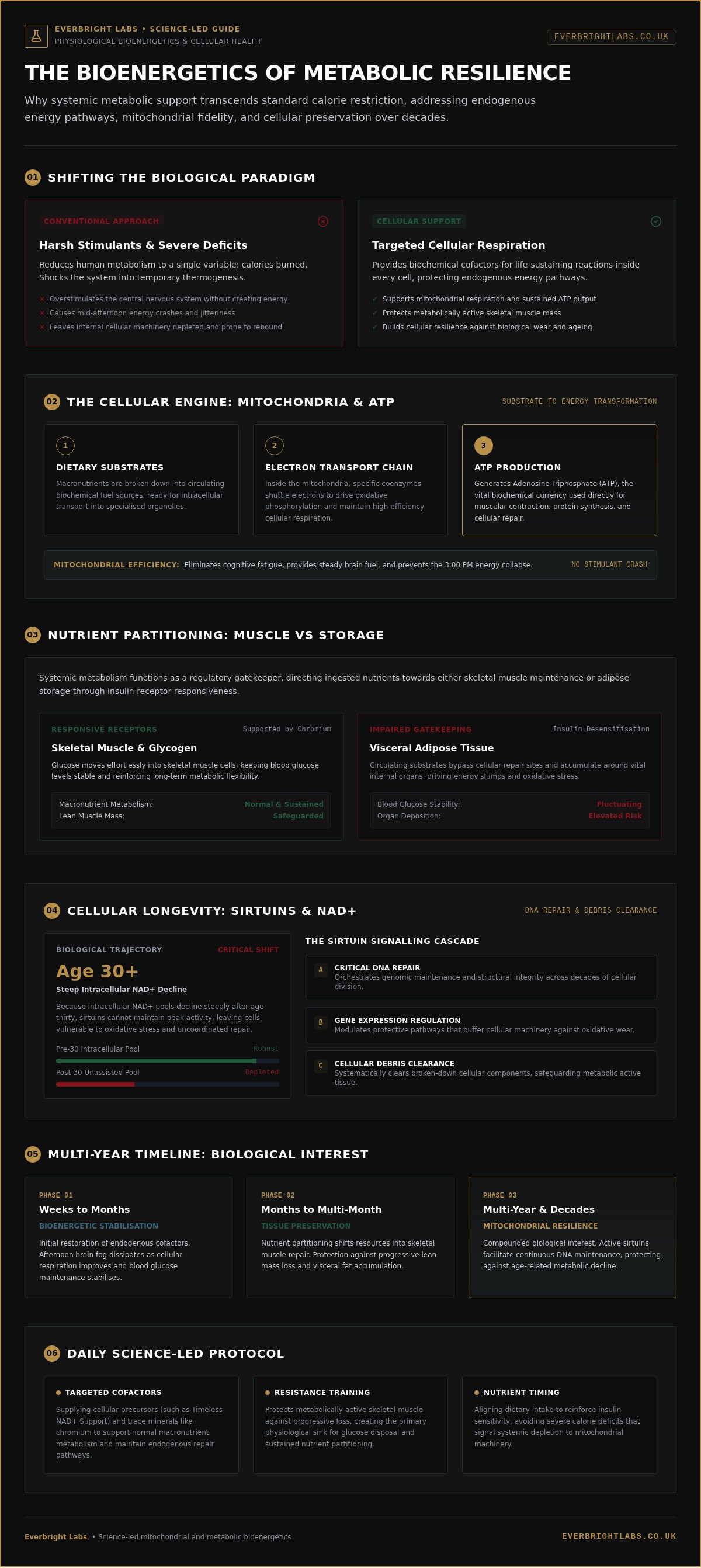
The standard approach to a sluggish metabolism is to shock the system into submission with harsh stimulants or severe calorie deficits, but this often leaves your cellular machinery depleted rather than revitalised. If you're struggling with afternoon brain fog, persistent fatigue, or the frustrating cycle of rebound weight gain, you already know how hollow those quick fixes feel. High-caffeine powders and jitter-inducing pills merely mask exhaustion by overstimulating your nervous system. In contrast, unlocking the long-term benefits of metabolic support requires shifting your focus away from rapid thermogenesis and looking directly at what happens inside your mitochondria.
True vitality stems from cellular resilience, not artificial spikes in heart rate. By supporting your internal energy pathways without stimulants, you protect metabolically active lean muscle mass, improve nutrient partitioning, and maintain dependable daily energy that doesn't crash at three in the afternoon. In this science-led guide, we examine the physiological mechanisms behind sustained metabolic health and explore how targeted nutritional strategies foster healthy cellular ageing for decades to come.
Key Takeaways
- Understand how systemic metabolic support works at the cellular bioenergetic level to sustain physical energy, cognitive focus, and tissue repair.
- Discover the long-term benefits of metabolic support, from safeguarding functional skeletal muscle to strengthening mitochondrial resilience over decades.
- Learn why central nervous system stimulants inevitably lead to biological crashes, and how stimulant-free formulations restore endogenous pathways safely.
- Follow the multi-year timeline of metabolic adaptation to see how physiological adjustments compound like biological interest over months and years.
- Explore a practical, science-led daily protocol combining targeted nutritional cofactors, resistance training, and nutrient timing to support healthy cellular ageing.
What Is Metabolic Support and Why Does It Matter Beyond Calorie Burning?
Commercial fitness culture often reduces human metabolism to a single, oversimplified variable: how many calories you burn during exercise or rest. In biological reality, metabolism is the intricate set of life-sustaining chemical reactions operating inside every cell of the human body. Targeted metabolic support is not about forcing an exhausted system into an unsustainable caloric deficit. Instead, it provides the precise biochemical cofactors required for efficient cellular respiration, enzymatic catalysis, and systemic tissue regeneration. Understanding the long-term benefits of metabolic support requires shifting your attention away from temporary scale fluctuations and towards foundational cellular vitality. When internal pathways function efficiently, your brain receives steady fuel, physical fatigue diminishes, and systemic wear decreases.
The Cellular Machinery: Mitochondria, ATP, and Energy Production
At the absolute centre of cellular bioenergetics are your mitochondria. These specialised organelles convert broken-down dietary substrates into adenosine triphosphate (ATP), the vital currency used for muscular contraction, protein synthesis, and cellular repair. When mitochondrial efficiency drops, everyday physical stamina declines and cognitive fatigue sets in. The electron transport chain inside these organelles relies heavily on specific coenzymes to shuttle electrons and sustain ATP output. Supplying the body with targeted cellular cofactors, such as Timeless NAD+ Support, promotes cellular repair and mitochondrial maintenance, protecting your energy pathways from oxidative stress without relying on artificial nervous system stimulation.
Nutrient Partitioning and Insulin Sensitivity Explained
Beyond energy output, systemic metabolism governs nutrient partitioning, the physiological mechanism determining whether calories are stored in fat tissue or directed toward muscle repair and glycogen storage. Healthy insulin sensitivity acts as the primary gatekeeper for this decision. When receptor sites remain responsive, circulating glucose moves effortlessly into skeletal muscle cells, keeping blood sugar stable and preventing energy slumps. Trace minerals like chromium play an essential biological role here, supporting normal macronutrient metabolism and normal blood glucose maintenance. Over months and years, efficient nutrient partitioning preserves metabolically active lean tissue and reinforces metabolic flexibility.
The Proven Long-Term Benefits of Sustained Metabolic Support
Viewing metabolism merely through the lens of short-term body weight misses its deeper protective function. In biological reality, metabolic resilience is the body's biological buffer against ageing, determining how efficiently tissues regenerate across decades. The fundamental truth about metabolism is that consistent biological optimisation prevents the cycle of persistent mid-afternoon fatigue, whilst safeguarding metabolically active skeletal muscle against progressive loss. When you harness the long-term benefits of metabolic support, you build a dependable physiological reserve that sustains daily energy and protects cellular integrity over time.
Cellular Longevity and the Activation of Sirtuins
Sirtuins are an essential family of signalling enzymes responsible for orchestrating critical DNA repair, regulating gene expression, and clearing damaged cellular debris. These protective proteins depend entirely on nicotinamide adenine dinucleotide (NAD+) to function properly. Because intracellular NAD+ pools decline steeply after age thirty, sirtuins can't maintain peak activity, leaving cells vulnerable to oxidative stress. Restoring these critical cellular reserves through targeted precursors, such as Timeless NAD+ Support, provides the necessary biological substrate to maintain enzymatic repair pathways well into mature adulthood.
Cardiometabolic Health and Balanced Lipid Transport
Sustained metabolic flexibility plays a direct role in preventing the unhealthy accumulation of visceral adipose tissue around vital internal organs. When internal transport pathways function smoothly, free fatty acids move directly into mitochondrial matrices for efficient beta-oxidation so they don't linger in systemic circulation. Key compounds like Acetyl L-Carnitine facilitate this intracellular shuttling of long-chain fatty acids, supporting long-term vascular flexibility and stable cardiovascular dynamics. Integrating a clean, stimulant-free option like Fat Metaboliser can assist this endogenous transport pathway without overtaxing your heart.
Cognitive Clarity and Protecting Brain Energy After 40
Your brain is your body's most energetically demanding organ, consuming roughly 20% of your resting energy budget despite making up just 2% of total body mass. As cellular metabolic flexibility wanes with age, neurons struggle to process fuel efficiently and can't maintain steady output, leading to mid-day mental slumps and reduced executive focus. Sustained cellular support ensures steady glucose uptake and preserves mitochondrial output across neural tissue. By keeping cerebral energy delivery reliable, you protect cognitive processing speed, maintain sharp working memory, and shield long-term neurological vitality.
Stimulant-Free Support vs Crash Stimulants: The Long-Term Divergence
The traditional supplement industry relies on high-dose caffeine and synthetic stimulants to mimic the feeling of a revved-up metabolism. That jittery sensation is not metabolic efficiency; it is an acute central nervous system stress response. While clinical analyses detailing how metabolism works demonstrate that systemic energy regulation depends on cellular chemistry, crash stimulants force a transient spike in heart rate that leads to neuroendocrine fatigue. Unlocking the long-term benefits of metabolic support requires nourishing internal biological pathways rather than draining bodily reserves through artificial sympathetic stimulation.
| Biological Marker | Short-Term Crash Stimulants | Stimulant-Free Support Protocols |
|---|---|---|
| Mechanism | Forces adrenaline release; elevates heart rate | Supplies cofactors for endogenous cellular pathways |
| Nervous System | Chronic sympathetic arousal; inevitable crash | Maintains autonomic balance without jitters |
| Sleep & Recovery | Suppresses deep slow-wave sleep cycles | Protects nocturnal restorative repair processes |
| Sustainability | Tolerance builds; triggers rebound weight gain | Compounds over months; supports cellular vitality |
The Cost of Central Nervous System Overstimulation
Relying on severe central nervous system stimulation comes with a high physiological price. Mega-doses of caffeine trigger excessive cortisol and adrenaline secretion, keeping your body in an artificial state of alert. Over time, this chronic sympathetic arousal disrupts restorative slow-wave sleep. Poor sleep suppresses your baseline resting metabolic rate and disrupts appetite-regulating hormones like leptin and ghrelin. The outcome is predictable: persistent cravings, fatigue, and rapid rebound weight regain once the stimulant cycle ends.
Nourishing the Underlying Pathway: Acetyl L-Carnitine and EGCG
A restorative approach replaces artificial stimulation with targeted nutritional substrates. Instead of forcing rapid thermogenesis, decaffeinated green tea extract delivers 225mg of epigallocatechin gallate (EGCG) to support lipid oxidation without cardiovascular strain. Pairing this with 1000mg of Acetyl L-Carnitine ensures that long-chain fatty acids are transported directly across the inner mitochondrial membrane for clean beta-oxidation. To explore how non-stimulant longevity protocols protect physiological health without triggering nervous system burnout, review the science of sustainable fat burners.
The Long-Term Timeline: What to Expect Over Months and Years
Biological transformation rarely mirrors the dramatic, overnight claims promoted by crash diets. Quick fixes typically reflect lost glycogen stores and transient water loss rather than improved enzymatic health. In contrast, physiological adaptation compounds like biological interest, accumulating quiet micro-adjustments beneath the surface until systemic efficiency shifts noticeably. Understanding the structured progression of the long-term benefits of metabolic support helps you evaluate meaningful biological milestones rather than fixating on daily scale fluctuations.
Weeks 1 to 4: Cellular Priming and Stable Daily Energy
The earliest shifts occur in your daily energetic baseline. As vital cofactors replenish internal enzymatic reserves, post-meal fatigue recedes and afternoon mental fogginess begins to clear. Natural prebiotic fibres such as chicory inulin support initial satiety by regulating digestive transit, helping to extinguish abrupt mid-morning sugar cravings. Within these initial weeks, cells improve hydration dynamics and the autonomic nervous system settles into a stable rhythm, entirely free from the tension provoked by high-caffeine stimulants.
Months 2 to 6: Enhanced Nutrient Partitioning and Body Composition
Between the second and sixth months, cellular improvements translate into visible physiological changes. Enhanced insulin sensitivity directs circulating glucose towards skeletal muscle storage rather than visceral fat tissue. Fatty acid oxidation operates more efficiently during daily movement, helping active individuals break through stubborn weight-loss plateaus without severe dietary deprivation. Muscular recovery also accelerates; tissues process metabolic waste more effectively, reducing post-exertional soreness and safeguarding functional lean muscle tissue over time.
Year 1 and Beyond: Mitochondrial Resilience and Vitality
Over extended time horizons, consistent metabolic support promotes mitochondrial biogenesis, the cellular creation of new, healthy power plants. This structural renewal helps defend your resting metabolic rate against natural mid-life hormonal shifts. Understanding why metabolism slows down after 40 reveals that physical decline is not an inevitable fate, but a biological prompt to nourish deeper cellular machinery. To cultivate this durable biological buffer across every decade, explore the science-led formulations available at Everbright Labs.
How to Build a Sustainable, Science-Led Metabolic Support Routine
Achieving durable metabolic efficiency requires a coordinated biological strategy rather than reliance on isolated habits. While a nutrient-dense diet establishes your baseline, targeted formulations bridge the specific physiological gaps that whole foods alone struggle to cover. Formulated by an Applied Biologist and a Chemical Engineer, Everbright Labs designs clean, transparent tools to elevate cellular performance. Realising the long-term benefits of metabolic support demands an intentional daily rhythm combining progressive physical stimulus, precise nutrient timing, and pure nutritional cofactors backed by rigorous third-party testing.
Foundational Lifestyle Habits That Amplify Supplement Synergy
Daily habits prime your internal environment so cellular cofactors function at full capacity. Implement these foundational pillars to maximise biological uptake:
- Progressive resistance training: Lifting weights stimulates glucose transporter type 4 (GLUT4) translocation, drawing glucose into skeletal muscle independently of insulin.
- Strategic nutrient timing: Consuming carbohydrates around active training windows directs glycogen replenishment straight to muscle tissue rather than adipose storage.
- Nocturnal recovery: Maintaining a consistent seven-to-nine-hour sleep window protects nighttime hormonal pulses that facilitate tissue repair and resting metabolic regulation.
Targeted Nutritional Support: The Applied Biology Approach
Selecting supplements requires clinical scrutiny. Look for products produced in clean UK facilities adhering to strict GMP and HACCP standards, complete with batch traceability and zero proprietary blends. For daily metabolic pathway assistance without nervous system strain, Fat Metaboliser provides verified bioactives without filler stimulants or hidden additives. By maintaining full label transparency, you guarantee that every compound serves a defined biochemical objective inside your cells.
Stacking Coenzymes and Metabolites for Comprehensive Cellular Health
Metabolic pathways don't operate in silos; they form an integrated energetic network. Pairing fatty acid transport agents with cellular NAD+ replenishment accelerates mitochondrial efficiency from both ends of the metabolic cascade. While lipid transporters deliver substrates directly into the mitochondrial engine room, electron carriers maintain the enzymatic flux required to generate usable cellular power. Stacking these complementary mechanisms delivers true metabolic harmony, shielding your cells against age-related decline and unlocking the long-term benefits of metabolic support over a lifetime.
Sustaining Cellular Vitality for Decades Ahead
True metabolic health isn't measured in rapid water loss or temporary nervous system spikes. By rejecting harsh stimulants in favour of targeted mitochondrial nutrition, you protect your body from hormonal exhaustion, defend lean muscle mass, and cultivate steady, all-day mental clarity. Unlocking the long-term benefits of metabolic support isn't about chasing rapid fixes; it's about providing your internal bioenergetic machinery with the precise substrates it needs to thrive year after year.
Formulated by a Chemical Engineer and an Applied Biologist, Everbright Labs develops clean nutritional tools manufactured in UK facilities under rigorous GMP and HACCP standards. Every formula is 100% stimulant-free, featuring fully disclosed active ingredients with zero proprietary blends or hidden fillers. When you honour your biology with technical precision, sustainable vitality follows naturally. Take control of your cellular health and explore Everbright Labs science-led formulations to invest in your long-term resilience today.
Frequently Asked Questions
How does metabolic support benefit my body over the long term?
Metabolic support enhances cellular bioenergetics and optimises how your tissues partition incoming nutrients over decades. Instead of forcing short-term weight loss through fluid depletion, it fortifies mitochondrial efficiency, stabilises baseline blood glucose, and protects metabolically active skeletal muscle. Harnessing the long-term benefits of metabolic support ensures your brain and muscular systems receive steady, dependable fuel without afternoon energy crashes or nervous system exhaustion.
Can I take metabolic support supplements indefinitely without taking a break?
Yes, provided your supplements are 100% stimulant-free and formulated to nourish endogenous biochemical pathways. High-caffeine fat burners require cycling because they overwork the adrenals and build neurological tolerance. In contrast, clean cellular cofactors, trace minerals, and amino acid derivatives work alongside your normal physiology. They supply basic building blocks that cells use daily, meaning you don't need to cycle off them to maintain their efficacy.
What is the difference between a metabolism booster and a stimulant fat burner?
A true metabolism booster improves internal substrate utilisation at the cellular level, whereas a stimulant fat burner merely triggers temporary sympathetic nervous system arousal. Stimulant products rely on mega-doses of caffeine to artificially elevate heart rate and adrenaline, often leading to post-supplement crashes. Restorative metabolic formulas use non-stimulant bioactives like Acetyl L-Carnitine and decaffeinated green tea polyphenols to assist mitochondrial fat oxidation smoothly and safely.
How long does it take to experience noticeable results from metabolic support?
Most individuals experience steadier daytime energy, sharper mental focus, and reduced sugar cravings within the first two to four weeks. Structural physiological changes take slightly longer to manifest. Improvements in nutrient partitioning, exercise recovery, and body composition typically consolidate between months two and six. Over a full year and beyond, consistent support reinforces mitochondrial density and helps defend resting metabolic rate against natural hormonal changes.
Will metabolic support prevent the natural age-related metabolic decline after 40?
While no intervention stops chronological ageing, targeted metabolic support directly mitigates the underlying biological processes that slow metabolism down. Mid-life metabolic slowdown is primarily driven by declining intracellular NAD+ levels and progressive loss of skeletal muscle tissue. Replenishing vital enzymatic coenzymes alongside resistance training preserves cellular repair mechanisms, maintains resting energy expenditure, and keeps metabolic pathways operating with youthful efficiency well past forty.
Can metabolic support help maintain weight loss and prevent plateaus?
Yes, it supports resting metabolic rate and promotes healthy insulin sensitivity during prolonged caloric balance. Aggressive diets often trigger compensatory metabolic adaptation, where the body slows energy expenditure and breaks down lean muscle tissue. Maintaining cellular cofactor availability ensures tissues continue shuttling fatty acids into mitochondria efficiently. This cellular preservation is one of the primary long-term benefits of metabolic support, protecting you against rapid rebound weight regain.
What ingredients should I look for in a safe, stimulant-free metabolic supplement?
Look for fully disclosed, research-backed bioactives that facilitate nutrient transport and mitochondrial function without proprietary blends. Highly effective ingredients include Acetyl L-Carnitine for shuttling long-chain fatty acids into mitochondria, decaffeinated green tea extract standardised for EGCG, and chromium for supporting normal blood glucose regulation. Pairing these with cellular coenzyme precursors ensures your internal machinery possesses everything required to transform stored energy into clean vitality.
Share:
Benefits of Buying a Supplement Bundle: A Science-Led Guide
Combatting Age-Related Fatigue: The Science of Restoring Cellular Energy