

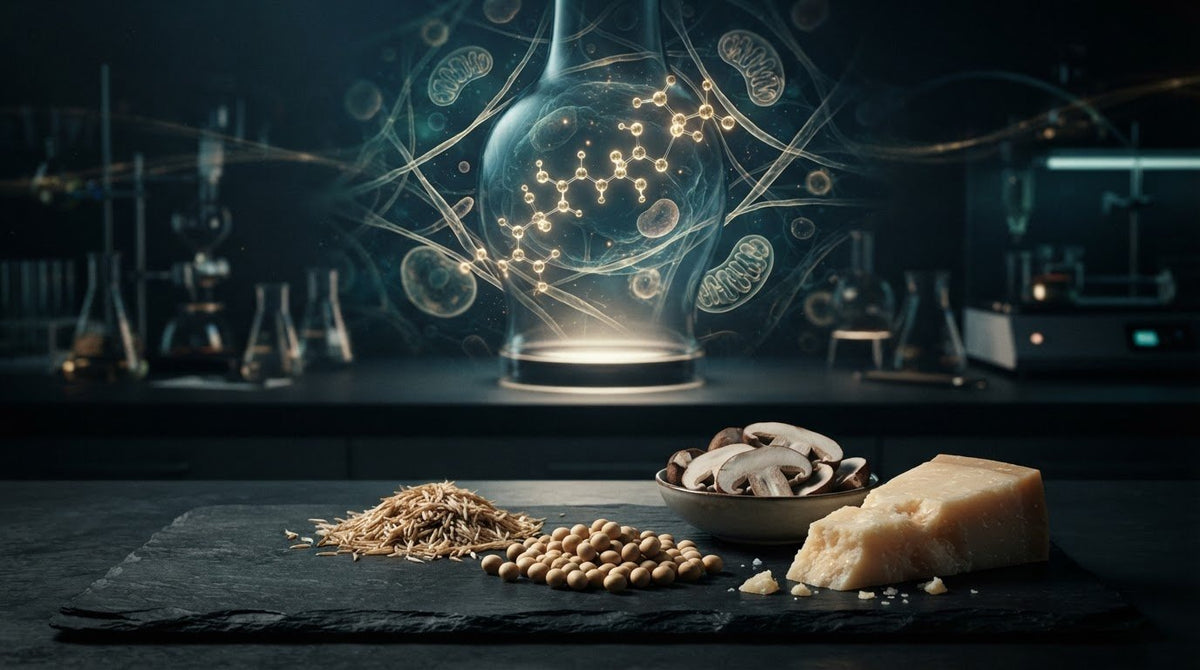
A molecule involved in cellular maintenance may offer useful clues about how we age. Spermidine is a naturally occurring polyamine that helps maintain healthy cells, and the connection between spermidine and healthy ageing is being explored through its role in autophagy, the process cells use to remove malfunctioning proteins and organelles. In apparently healthy people, spermidine concentrations in certain blood cells decline with advancing age.
It’s understandable to want clear answers when a biological process is linked to longevity. The evidence is still developing, and findings from cells and animals do not automatically predict the same effects in people. Keeping that distinction in mind puts potential benefits into perspective.
This article explains what spermidine is, how levels may change with age and what research has linked it to, including cellular maintenance and cognitive health. You’ll also find practical food sources, from wheat germ and soybeans to mushrooms and aged cheese, and a clear account of what current human studies can and cannot tell us.
Key Takeaways
- Spermidine is a naturally occurring polyamine involved in cellular maintenance, including autophagy.
- Levels in some blood cells tend to decline with age, although this doesn’t by itself show what an individual’s levels are.
- Wheat germ, soybeans, mushrooms and aged cheese are food sources to explore as part of a varied diet.
- Research links spermidine with cardiovascular and cognitive health, but findings differ across human and animal studies.
- Learn how to interpret the evidence alongside the practical food sources discussed in the article.
Age-related changes in spermidine levels
Spermidine is a naturally occurring polyamine involved in cellular maintenance. In apparently healthy people, endogenous spermidine concentrations decline with age. Researchers have observed this pattern in peripheral blood mononuclear cells and red blood cells. Human circulating levels are often in the low micromolar range. These measurements describe populations and specific blood components, not an individual diagnosis. Spermidine also comes from food and gut microbes, while mammalian cells can make it from putrescine. Age-related changes therefore reflect a biological system, not one isolated source.
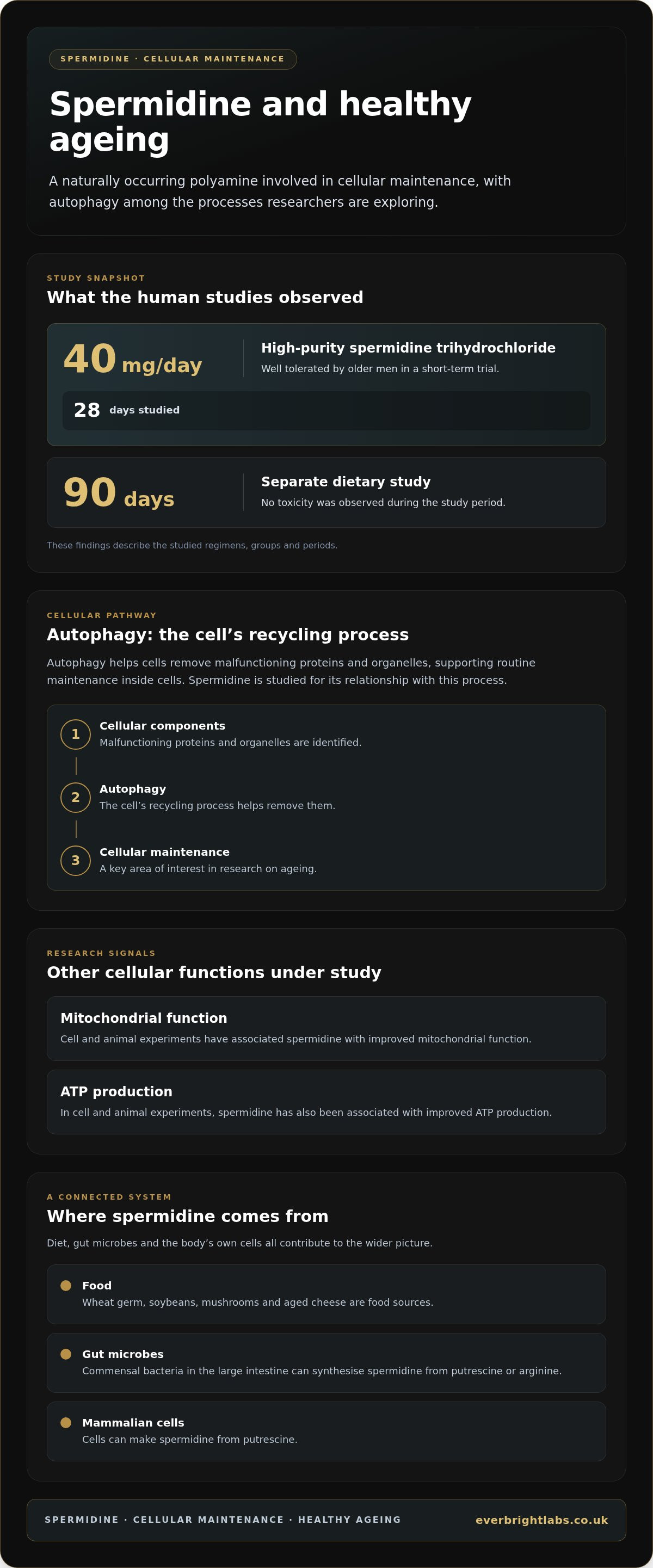
One reason researchers study spermidine is its relationship with autophagy. This cellular process helps remove malfunctioning proteins and organelles, supporting routine maintenance inside cells. Longevity research investigates whether changes in this process might matter as organisms age. A decline in blood-cell spermidine does not, by itself, establish that autophagy has slowed in every tissue. Blood measurements, cellular activity and health outcomes are related questions, but they are not interchangeable. This distinction matters when interpreting findings about age-related spermidine levels.
Cognitive health is another active area of investigation. Emerging studies suggest spermidine may have neuroprotective properties and could help safeguard against age-related cognitive decline. Research has examined conditions including Alzheimer’s and Parkinson’s disease. These findings provide a biological rationale for further study, but they do not show that spermidine prevents or treats either condition. Elevated plasma polyamines have also been associated with greater risk of post-stroke cognitive impairment in people with ischaemic stroke. Polyamine levels and cognitive outcomes can therefore show different associations in different clinical contexts.
Cancer biology adds an important layer of context. Polyamines participate in cell growth, so their effects can depend on the tissue, immune environment and disease state. In the glioblastoma tumour microenvironment, spermidine has been reported to promote tumour progression by inhibiting CD8+ T-cell function. This finding concerns a specific tumour environment; it does not establish that dietary spermidine causes cancer. It does show why researchers examine where spermidine acts, which cells are involved, and whether cancer is already present. A single effect cannot represent every tissue or health condition.
Safety findings also depend on study design and duration. In a short-term trial, 40 mg/day of high-purity spermidine trihydrochloride was well tolerated in older men for 28 days. A separate 90-day dietary study observed no toxicity. These results offer useful information about the studied regimens, populations and periods. They do not settle long-term safety across all groups or clinical circumstances. Read together, the evidence supports continued investigation while highlighting why dose, source and biological context matter when evaluating spermidine and ageing.
How Does Spermidine Boost Anti-Aging Through Biohacking?
Spermidine may influence autophagy, the cellular recycling process that removes damaged components. By supporting cellular maintenance, it could affect pathways relevant to age-related disease, although effects depend on biological context.
Spermidine as a polyamine
Spermidine is an organic compound in the polyamine group, involved in maintaining healthy cells. Crystals of spermine were identified in human semen in the seventeenth century, and spermidine was first synthesised in 1924. This history reflects longstanding scientific interest in these molecules. For readers, the key point is their functional role: polyamines support essential cellular processes, rather than acting as a single-purpose longevity switch. Their effects depend on how cells produce, use and regulate them.
Polyamine production by gut microbiota
Polyamines come from both the body’s own production and dietary sources, with gut microbes contributing to the body’s supply. In humans, commensal bacteria in the large intestine can synthesise spermidine from putrescine or arginine. Mammalian cells also make spermidine from putrescine, which forms during arginine metabolism. This connection makes dietary intake and microbial metabolism parts of the same biological system.
Polyamines and cellular functions
Polyamines support cellular functions linked to growth, maintenance and metabolism. Autophagy is one area of interest: spermidine may restore autophagic flux partly through the eIF5A-TFEB axis. In cell and animal experiments, it has also been associated with improved mitochondrial function and ATP production. These mechanisms help explain why researchers study spermidine in relation to ageing. They don’t establish a single outcome across every tissue, because cellular function changes with tissue type and health state.
That context matters when polyamine levels become elevated or dysregulated. Because polyamines play a role in cell growth, their effects can vary between healthy tissue and a disease environment. In some cancers, tumour cells can exploit processes that normally support cellular activity. The relevant question is not simply whether polyamines are present, but where they act and how local cells respond. This helps explain why research investigates both potential benefits and risks.
Interventions targeting polyamine metabolism
Researchers can study polyamine pathways by changing how cells make or use these compounds. Alpha-difluoromethylornithine, or DFMO, blocks arginine catabolism. In mice, DFMO restored memory loss and prevented Alzheimer’s disease-like pathology by blocking this pathway. This is an experimental finding, not evidence that people should use DFMO for cognitive concerns. It illustrates how altering polyamine metabolism can affect disease-related processes, and why interventions require careful study.
Evidence spans mechanisms, cells and animal models, each of which answers different questions. Together, these approaches help researchers examine how spermidine relates to autophagy, cellular function and disease, without treating one pathway as a universal explanation for ageing.
Cardiovascular and cancer mortality associations
Human population studies associate higher dietary spermidine intake with lower cardiovascular and cancer-related mortality. These findings describe patterns across groups, not proof that spermidine alone prevents disease.
Cardiovascular health findings
Cardiovascular research links dietary spermidine with outcomes including fatal heart failure. The Bruneck Study followed 829 adults aged 45 to 84 from 1995 to 2010. Higher spermidine intake was associated with around 40% lower risk of fatal heart failure. Researchers have also linked intake with lower blood pressure, improved arterial elasticity and better cardiovascular function. These associations make spermidine relevant to healthy-ageing research, but they don’t establish a treatment effect.
Potential biological explanations include effects on inflammation, mitochondrial function and cellular energy production. Experimental studies found that spermidine may improve mitochondrial function and ATP production in cell and animal models. These mechanisms may help researchers understand cardiovascular findings, but they are not direct evidence of improved outcomes in adults. A proposed effect on cholesterol also needs careful interpretation: changes in blood pressure, arterial elasticity and mortality are distinct measures. None can stand in for another.
Human evidence includes population-level observations and clinical investigation. The ongoing POLYCAD cardiovascular disease trial is evaluating spermidine at 24 mg per day. Its results may add evidence about cardiovascular health, but an ongoing trial cannot yet establish its findings. For now, the Bruneck association offers a long-term human observation, while experimental work explores possible cellular mechanisms. Together, these different forms of evidence inform research without proving that spermidine independently causes a particular benefit.
Dietary intake and human longevity evidence
Human longevity evidence comes chiefly from prospective population-based studies. These studies associate higher dietary spermidine intake with lower cardiovascular and cancer-related mortality. The Bruneck Study provides a specific cardiovascular example, reporting an association with fatal heart failure. Such findings help researchers identify relationships worth investigating, while differences in diet and health behaviours can complicate interpretation. They do not establish that increasing one nutrient will produce the same outcome for everyone.
The cancer-related association also needs context. A lower rate of cancer-related mortality in groups with higher intake does not mean spermidine prevents cancer or treats existing disease. Mortality findings describe outcomes across populations; they do not explain every biological pathway or cancer type. This matters because polyamines can have context-dependent effects in cells, as research on tumour environments illustrates.
For readers assessing spermidine and healthy ageing, the evidence has several layers: population associations, clinical trials and laboratory research. Each answers a different question. Dietary patterns can be compared with long-term health outcomes, while trials examine defined interventions. Cell and animal models explore mechanisms such as mitochondrial function. Taken together, these findings make spermidine a relevant research subject, not a stand-alone measure of cardiovascular or cancer risk.
Dietary sources of spermidine
Wheat germ, soybeans, mushrooms and aged cheese are dietary sources of spermidine. Comparing their spermidine content can help inform everyday food choices.
Spermidine content in dietary sources
Food tables report differing spermidine concentrations, measured by weight. Wheat germ is listed at 243 mg/kg, dried soybeans at 207 mg/kg, and 12-month aged cheddar at 199 mg/kg. Pumpkin seeds provide another option, at 104 mg/kg. These figures compare foods by weight, rather than giving the amount in an ordinary portion.
Whole grains, mushrooms and other aged cheeses can also contribute to dietary intake. Food composition varies with preparation and product, so use concentration figures as comparisons rather than exact meal estimates. Average human spermidine intake from food is around 10 mg per day. A varied diet can include several sources instead of relying on one ingredient or food group.
After consumption, spermidine can be absorbed in the small intestine from foods such as wheat germ, soybeans, aged cheese and mushrooms. Food-derived spermidine enters through digestion, while gut microbes also contribute to the body’s polyamine supply. Food intake is therefore one part of a broader system involving absorption and microbial production.
Dietary intake and supplementation
Dietary intake means spermidine obtained from foods; supplementation provides a measured amount in a product. Human evaluations have examined rice germ extract regimens ranging from 1.5 mg to 3.3 mg daily. One study found that daily supplementation with 3.3 mg of spermidine from rice germ extract improved biomarkers of autophagy and cardiometabolic health. These findings add to research on how defined intakes may support biological processes.
Clinical studies have explored cognitive outcomes and spermidine intake in older adults, using different populations and measures. Their findings contribute to an evolving evidence base, alongside research on biomarkers and cardiovascular health. Together, these studies help clarify which outcomes researchers assess, from cellular markers to memory performance.
Clinical findings are not, by themselves, UK health-authority guidance on supplementation. When reviewing a product label, compare the declared spermidine amount, source, serving directions and warnings. Clinical evidence does not determine a UK supplement’s price; compare products by their stated amount and cost per serving, rather than pack price alone. Dietary sources and supplements are distinct ways of obtaining spermidine, and research into both continues.
Spermidine and healthy ageing
Spermidine is a naturally occurring polyamine involved in cellular maintenance. Researchers are exploring its relationship with healthy ageing through biological pathways such as autophagy. This process offers one way to study how cells manage their internal components as they age. It is a mechanism to investigate, not a simple measure of longevity.
Animal studies help researchers examine outcomes over time. Spermidine feeding increased median lifespan by roughly 10 to 15% in animal models, and its influence on longevity has been reported from yeast to humans. In mice, serum spermidine levels increased after eight months of caloric restriction. A separate six-month regimen in drinking water attenuated age-associated phenotypes. These findings provide useful evidence for further study, while animal results and human outcomes remain distinct.
Human research examines specific groups and measures. A randomised controlled Phase IIa trial reported a positive impact on memory performance in older adults at risk of dementia after three months of supplementation. A separate three-month trial examined spermidine in older adults with dementia, while another study reported effects after one year. These trials extend the investigation across different cognitive settings and timeframes.
Researchers also assess biological markers that may help explain how an intervention acts. Daily supplementation with 3.3 mg of spermidine from rice germ extract improved biomarkers of autophagy and cardiometabolic health. Human interventional evaluations have reviewed rice germ extract regimens ranging from 1.5 mg to 3.3 mg daily. Biomarkers provide information about physiological processes, complementing cognitive and other health measures.
Together, these studies show why spermidine intake features in several areas of ageing research, rather than pointing to one definitive outcome. Animal lifespan findings, human memory results and cellular markers each address different questions. Research into whether spermidine may extend healthy years of life is ongoing, so it is best to consider these types of evidence side by side.
For readers interested in a defined source, Timeless NAD+ Support contains wheat germ extract providing 3 mg of spermidine. It is designed to support healthy ageing and longevity. Explore spermidine-containing healthy-ageing support as one option alongside food sources and other considered approaches.
Everbright Labs: Fat Metaboliser
Fat Metaboliser is designed to provide metabolic support, a different focus from spermidine’s role in healthy-ageing research. It may suit readers looking to support metabolic function as part of a broader health routine. The stimulant-free, caffeine-free formula combines acetyl-L-carnitine, decaffeinated green tea extract, inulin, olive leaf extract, choline, chromium and black pepper extract.
Its decaffeinated green tea extract provides EGCG, while inulin comes from chicory root. These ingredients make the product’s focus distinct from the cellular-maintenance pathways discussed above. For readers specifically interested in spermidine, Timeless NAD+ Support contains wheat germ extract providing 3mg of spermidine.
Explore the Fat Metaboliser formula and visit Everbright Labs to learn more.
Choose a next step that fits your priorities
Use what you’ve learnt to decide which aspect of your wellbeing you want to focus on next. You might start by reviewing your usual food choices or considering whether cellular health or metabolic support is more relevant to your goals. Research into spermidine and healthy ageing is ongoing, so keep the difference between promising mechanisms and established outcomes in view.
A considered approach does not require changing everything at once. Identify the support you’re looking for, read product information carefully and choose a routine that feels practical to maintain. Everbright Labs offers formulations with different areas of focus, so you can explore an option that aligns with your priorities.
Contact Everbright Labs to learn more, and take your next step with confidence and care.
Frequently Asked Questions
What is Spermidine?
Spermidine is a naturally occurring compound in the polyamine family, found in the body and in foods. It participates in processes that help cells maintain their internal structures and manage their contents. For example, researchers study its relationship with autophagy, the cellular recycling process. This role explains its relevance to ageing research, but spermidine is one part of a wider biological system, not a single-purpose longevity switch.
Conclusion: Should You Add Spermidine to Your Longevity Routine?
Consider spermidine as one possible part of a broader routine, rather than the whole plan. You could first include foods such as mushrooms, whole grains or aged cheese, then consider whether a supplement fits your preferences. Check the declared spermidine amount and serving directions, and take your health circumstances and medicines into account. A routine is easier to assess when you make one change at a time and keep other habits consistent.
How Can Spermidine Enhance Anti-Ageing Processes?
Spermidine may support processes associated with cellular maintenance, particularly autophagy. This process lets cells break down and recycle worn components rather than allowing them to accumulate. Researchers have also investigated possible links with mitochondrial function and cardiometabolic markers. These mechanisms help explain why spermidine is studied in ageing, but they represent different biological outcomes. A change in a marker should not automatically be interpreted as longer life or reduced disease risk.
What Are Polyamines?
Polyamines are small organic compounds present in living cells, including spermidine, spermine and putrescine. They participate in cellular processes such as growth and maintenance. The body can produce spermidine through pathways involving putrescine, while gut microbes and food also contribute to the wider system. Their functions depend on where they are present and how cells use them, which is why researchers study polyamines across different tissues and health conditions.
What is Autophagy and Why Does It Matter for Longevity?
Autophagy is a cell’s process for breaking down and recycling damaged or unwanted components. Imagine a cell sorting reusable materials from worn-out parts: this internal housekeeping helps maintain cellular function. Ageing studies examine whether changes in autophagy relate to the body’s ability to preserve healthy tissue. Researchers study spermidine in connection with this pathway, but autophagy is only one part of the complex biology involved in healthy ageing.
Why Choose Spermidine Supplements for Longevity?
A supplement can provide a clearly declared amount in a consistent serving, which some people may find convenient alongside food sources. For example, Timeless NAD+ Support contains wheat germ extract providing 3mg of spermidine, as well as nicotinamide riboside chloride and liposomal trans-resveratrol. It is designed to support healthy ageing and longevity. Review the product’s full ingredient information and directions to decide whether its formulation matches your routine.
Which foods contain the most spermidine, and how much is in a typical serving?
Wheat germ, dried soybeans, aged cheddar and pumpkin seeds are among the listed food sources. Reported concentrations are measured by weight: wheat germ is 243 mg/kg, dried soybeans 207 mg/kg, 12-month aged cheddar 199 mg/kg, and pumpkin seeds 104 mg/kg. These figures describe food content per kilogram, not a typical serving. The amount in a portion depends on its weight and the food’s composition.
How much spermidine do people get from their diet, and is there a recommended daily intake?
Average human spermidine intake from food is around 10 mg per day. That figure describes an average, not a personal target or a recommended dose. Food choices can vary, with wheat germ, soybeans, mushrooms and aged cheese contributing different amounts. Supplement study doses are separate from usual dietary intake, so don’t treat trial amounts as a daily requirement. Consider both food and any supplement serving when reviewing your overall intake.
Share:
NAD+ for Anti-Ageing: Potential Benefits and What Evidence Shows
Spermidine supplement clinical studies on safety and evidence